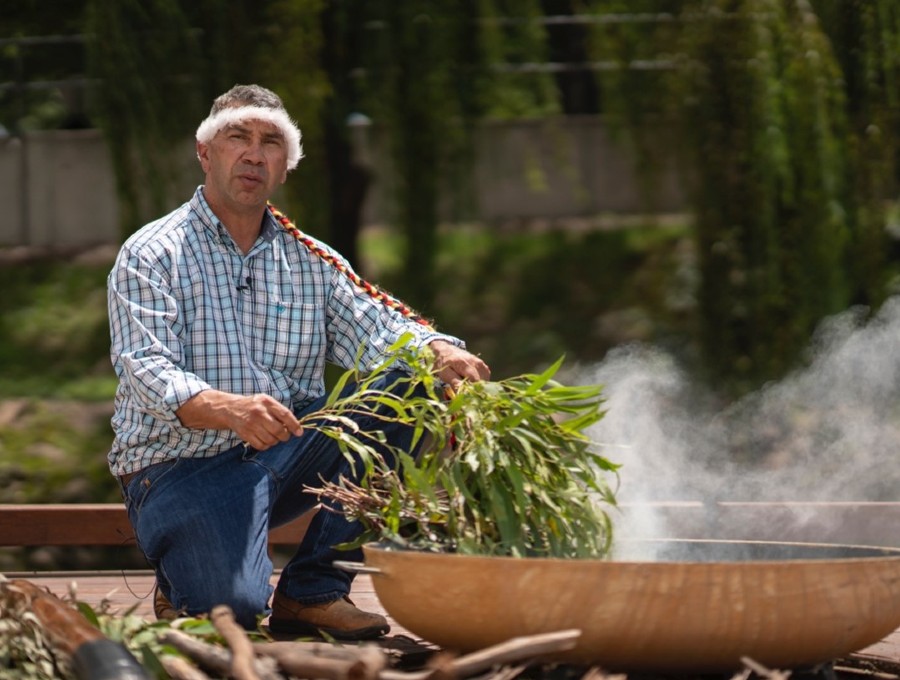
National Reconciliation Week (NRW) is a time for all Australians to learn about our shared histories, cultures, and achievements, and to explore how each of us can contribute to achieving reconciliation in Australia.
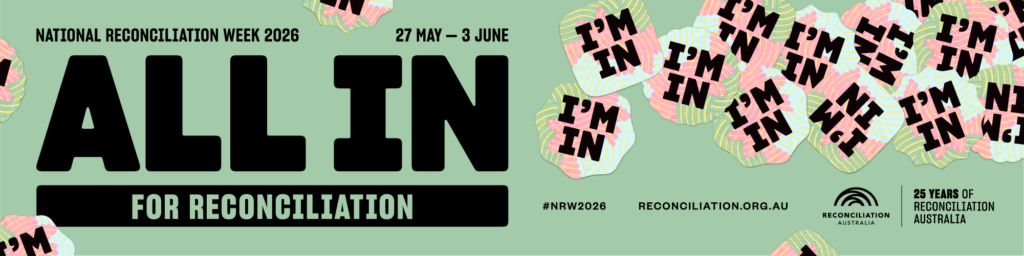
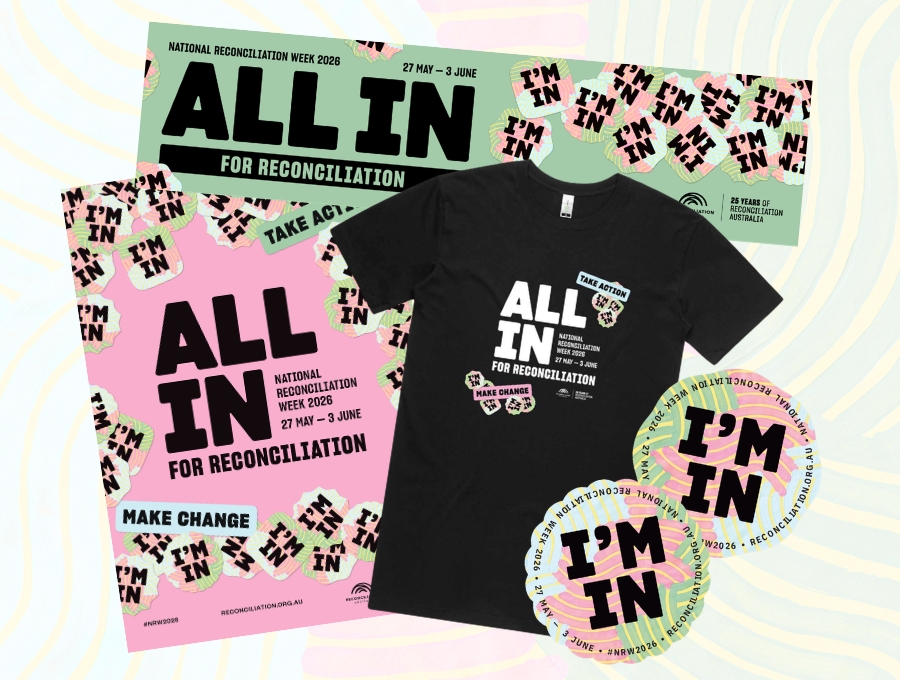
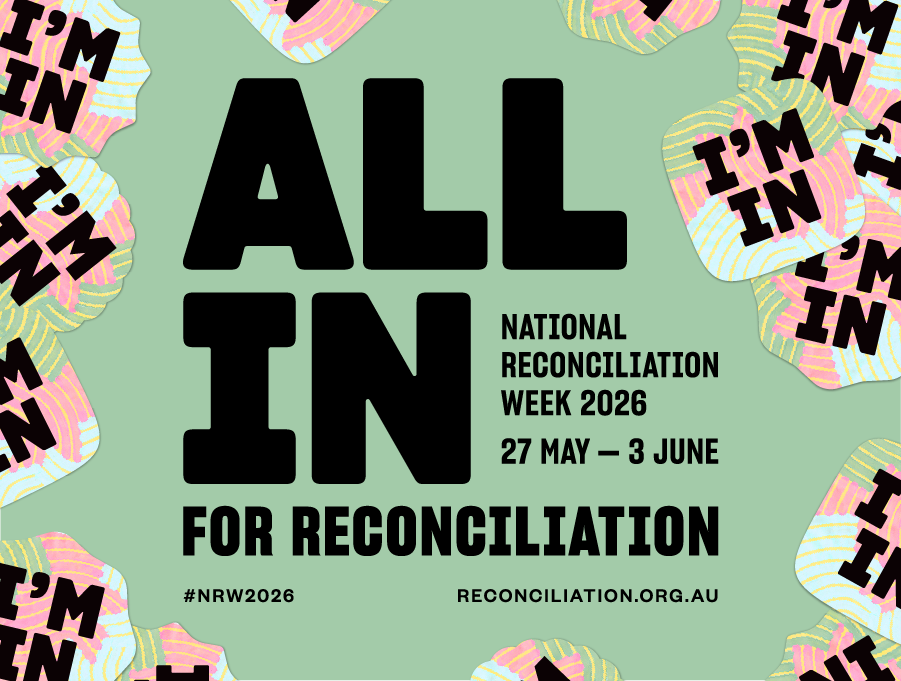
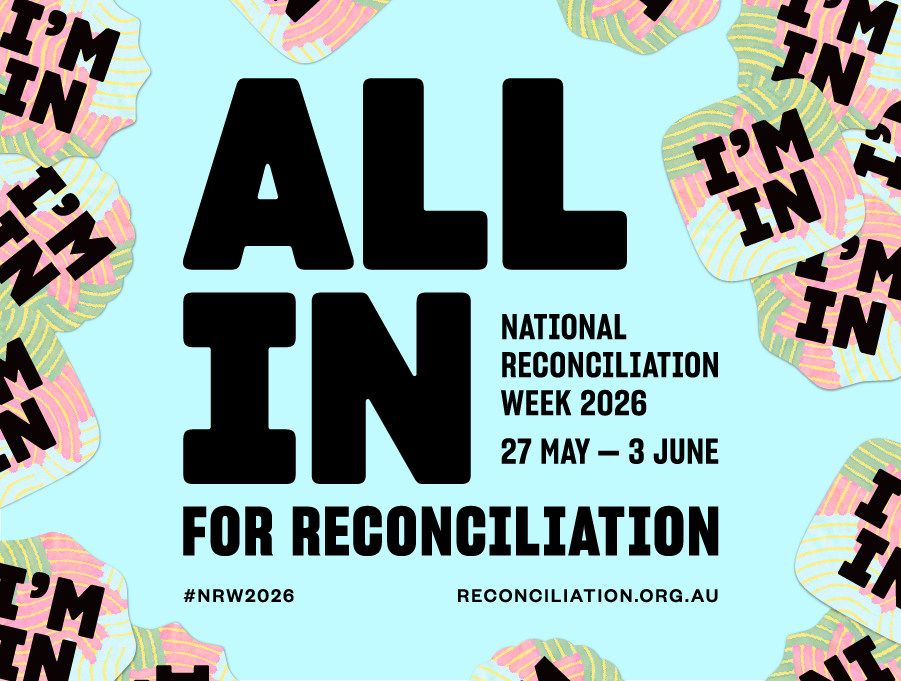
All In for National Reconciliation Week 2026
The theme for National Reconciliation Week 2026 is All In, a call for all Australians to commit wholeheartedly to reconciliation every single day.
All In makes clear that reconciliation is not a spectator sport and that all of us must step away from the sidelines and take action to make change.
The theme also reminds us that reconciliation and advancing Aboriginal and Torres Strait Islander peoples’ rights isn’t a passive activity, and it is not solely the responsibility of First Nations people, who have carried the weight of championing, explaining and acting for far too long.
Reconciliation will not happen by itself, and it will not happen without all of us.
The #NRW2026 campaign was created in collaboration with Carbon Creative, a First Nations-owned and operated marketing and creative agency.
The artwork for this campaign is by renowned Gumbaynggirr/Bundjalung artist Otis Hope Carey, who applied his distinctive style to create a colourful and optimistic visual representation of people from all walks of life being ‘all in’ to make change.
Events, resources and choirs
Posters and social tiles are available now from the posters and resources page. More resources will be added in the lead-up to NRW, so stay tuned.
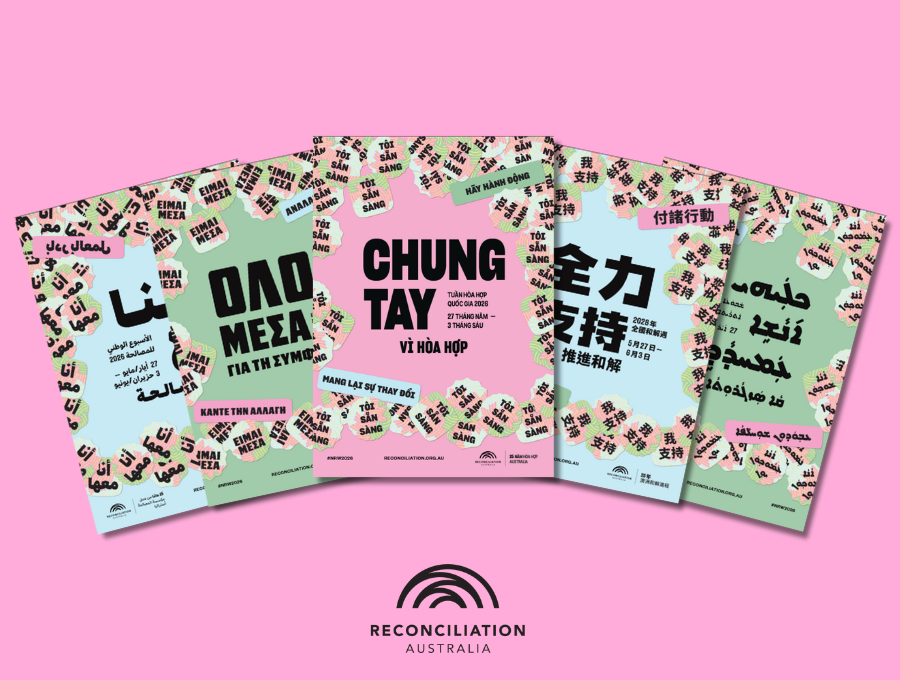
Posters, colouring sheets and social tiles in 13 languages other than English are available now from the translated resources page.
The Voices for Reconciliation 2026 song is Midnight Oil classic Beds Are Burning.
Visit the Choirs page for more information and to register your group.
Event registration is open now. Visit the Events page to register your public or private event.
Artwork and artist
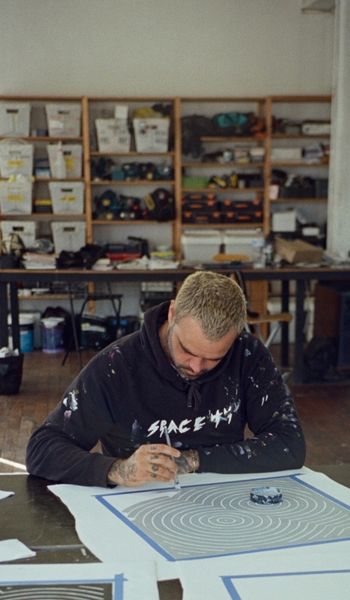
Otis Hope Carey’s number one pursuit is the sharing of culture through his artworks in order to promote healthy conversations and education through the arts.
The #NRW2026 artwork is called Gaagal. Gumbaynggirr Bundjalung artist Otis Hope Carey explains its inspiration and significance:
‘All of my paintings connect to water. This artwork uses the ocean as a metaphor for people from all walks of life swirling together to be ‘all in’ for reconciliation.
‘The phrase ‘Gaagal’ translates to ‘Ocean’, and it is the totemic spiritual emblem of the Gumbaynggirr people. It’s a really important clan totem and holds a lot of healing elements for us.
‘We are a saltwater and freshwater people, and any body of water is sacred to us. My paintings are my interpretation of my connection to water. I use patterns to capture the flow of connection and the energetic rhythms of moving water.
‘Concentric circles are traditional symbols which are exaggerated and expanded out to represent water and the way it may move in ripples when struck by rain, wind, or if a rock were to hit its surface.
‘This echoes the action of people moving together for change, their voices and actions rippling outwards, inviting others on the reconciliation journey.
‘The movement in the work is a representation of tidal charts, wave currents and flowing tides, which emulates the non-stop movement of the ocean… a symbol that reflects the ongoing fight for reconciliation in this country.’
What is National Reconciliation Week?
The dates for NRW remain the same each year; 27 May to 3 June. These dates commemorate two significant milestones in the reconciliation journey – the successful 1967 referendum, and the High Court Mabo decision respectively.
Reconciliation must live in the hearts, minds and actions of all Australians as we move forward, creating a nation strengthened by respectful relationships between the wider Australian community, and Aboriginal and Torres Strait Islander peoples.
We all have a role to play when it comes to reconciliation, and in playing our part we collectively build relationships and communities that value Aboriginal and Torres Strait Islander peoples, histories, cultures, and futures.
NRW: A brief history
National Reconciliation Week started as the Week of Prayer for Reconciliation in 1993 (the International Year of the World’s Indigenous Peoples) and was supported by Australia’s major faith communities.
In 1996, the Council for Aboriginal Reconciliation launched Australia’s first National Reconciliation Week.
In 2001, Reconciliation Australia was established to continue to provide national leadership on reconciliation.
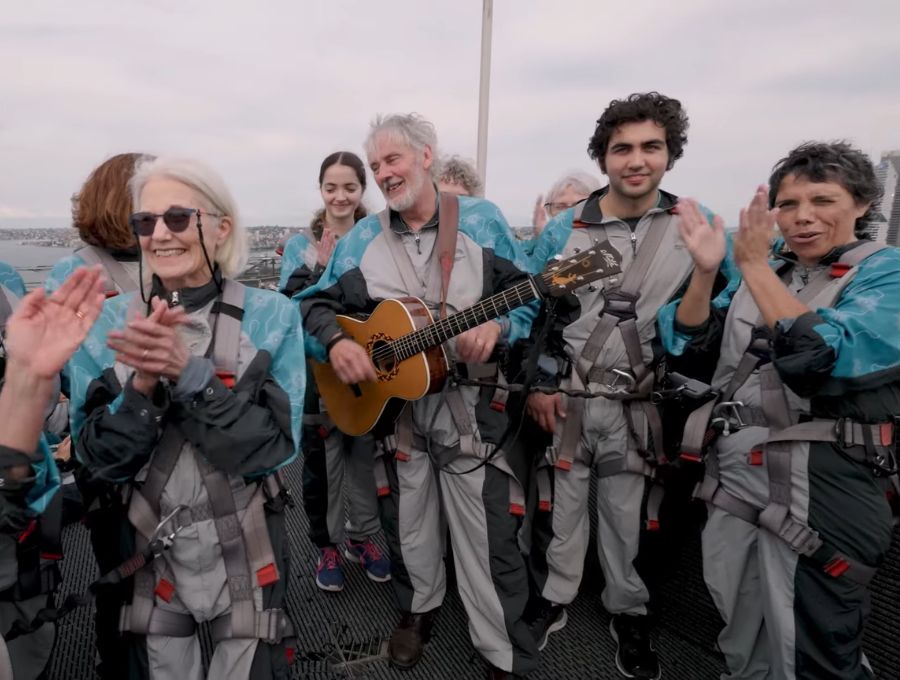
The year before, approximately 300,000 people walked across Sydney Harbour Bridge as part of National Reconciliation Week – and subsequently across bridges in cities and towns throughout Australia – to show their support for reconciliation.
Today, National Reconciliation Week is celebrated in workplaces, schools and early learning services, community organisations and groups, and by individuals Australia-wide.
Check out our factsheet on National Reconciliation Week.
Learn more about previous National Reconciliation Week themes.
News