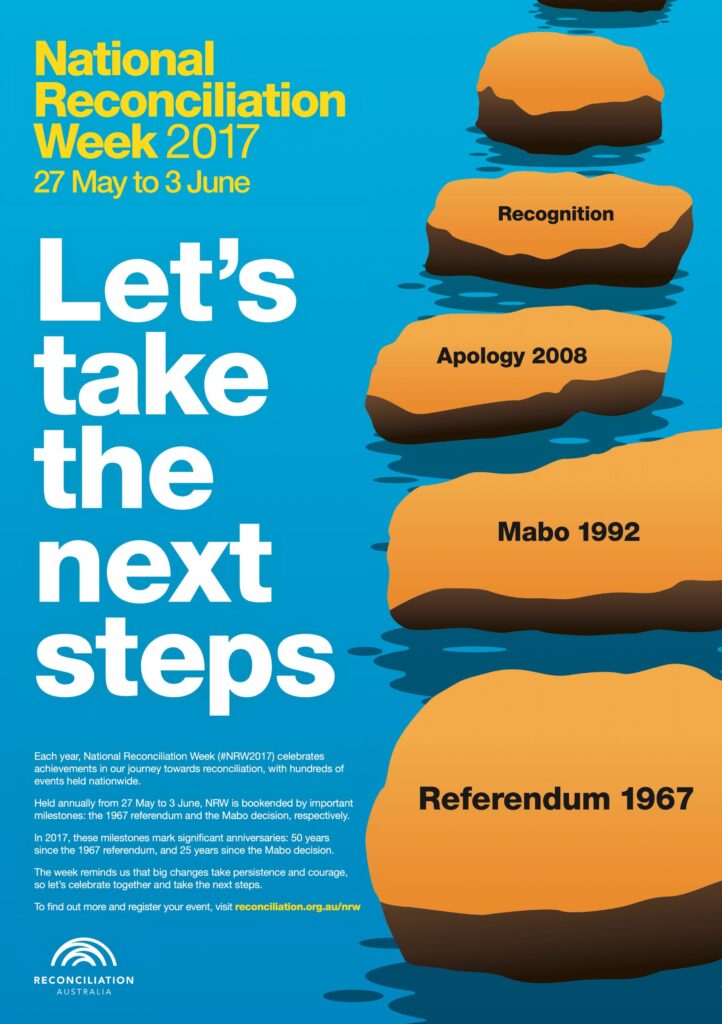
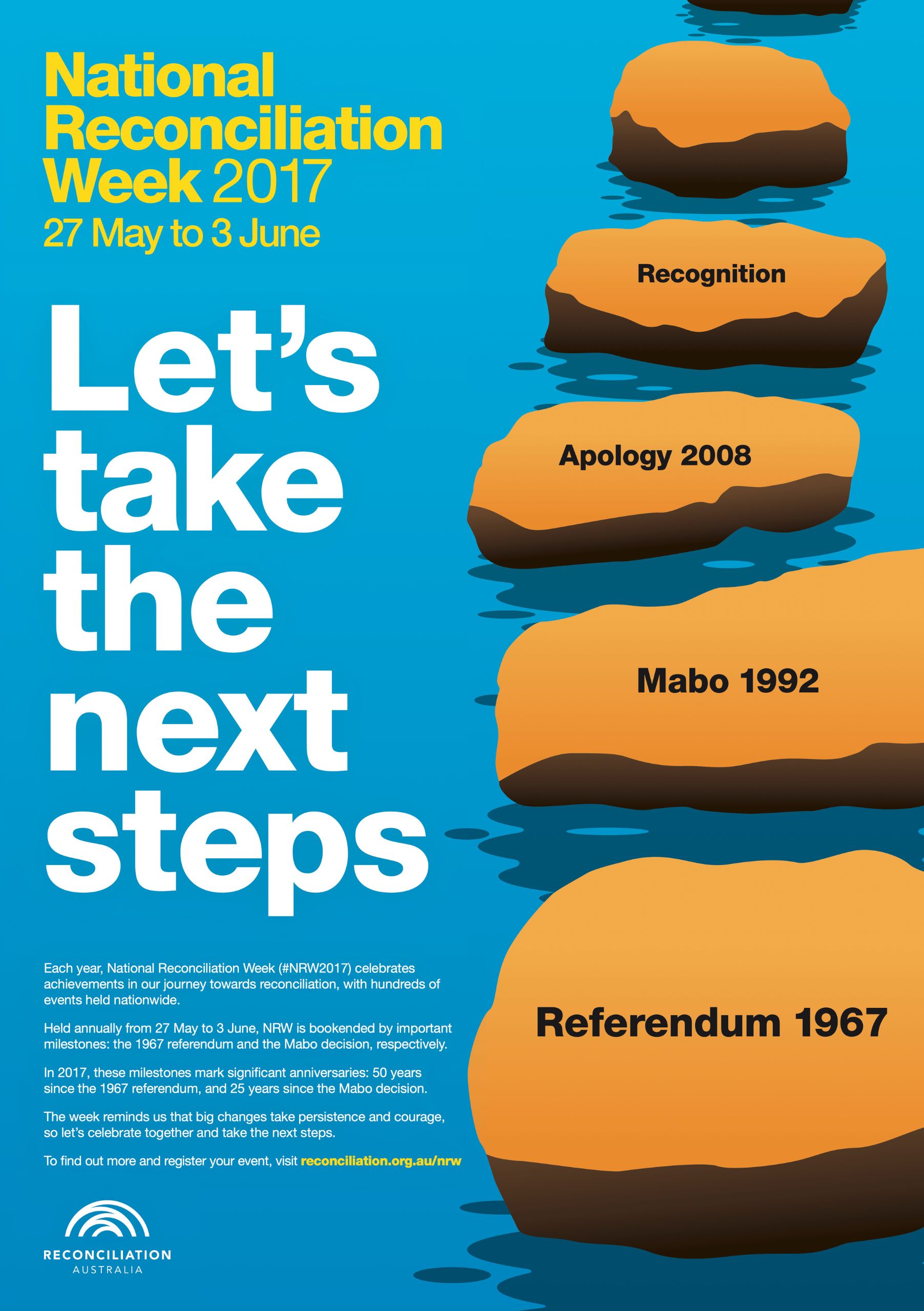
While the dates for National Reconciliation Week remain the same every year, 27 May – 3 June, the theme changes to reflect Australia’s progress on the journey of reconciliation, to mark where we’ve come from and to signal where we hope to go.
Browse through the posters and themes from previous years below. Use the arrows to scroll through, then click on the poster for more information and to download a PDF version.
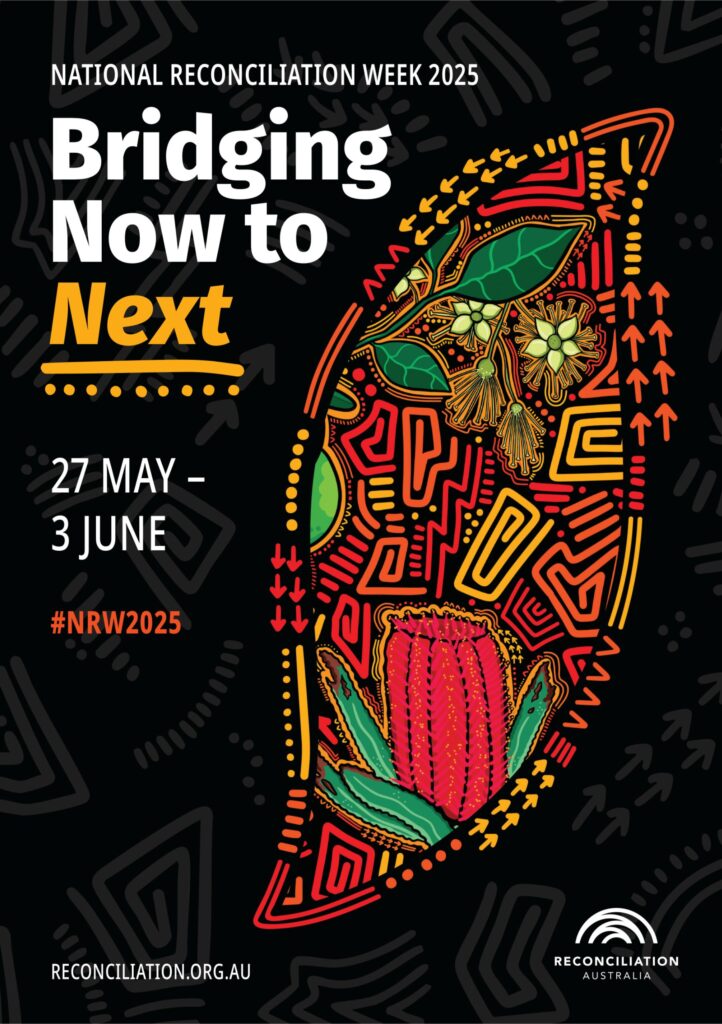
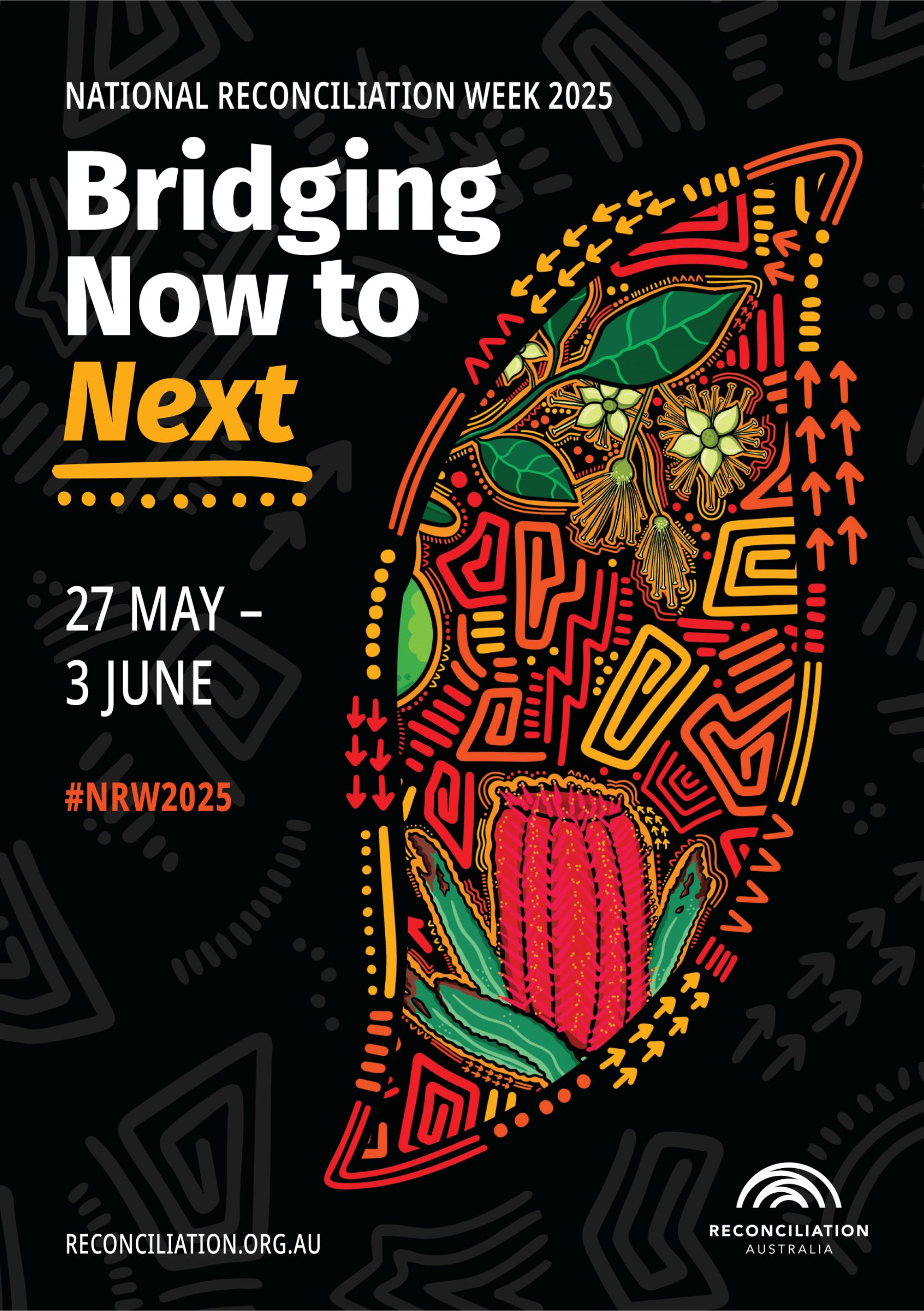
The National Reconciliation Week 2025 theme reflected the ongoing connection between past, present and future. Bridging Now to Next calls on all Australians to step forward together; to look ahead and continue to push forward as past lessons guide us.
In the artwork created by Kalkadoon woman Bree Buttenshaw, native plants – known for regenerating after fire and thriving through adversity – symbolise our collective strength and the possibilities of renewal. NRW is a time for growth, reflection and recommitment to walking together.
Twenty-five years ago, Corroboree 2000 brought Aboriginal and Torres Strait Islander and non-Indigenous leaders together in an historic call for reconciliation. We continue that work in 2025, inviting all Australians to join us in Bridging Now to Next, in building a more united and respectful nation.
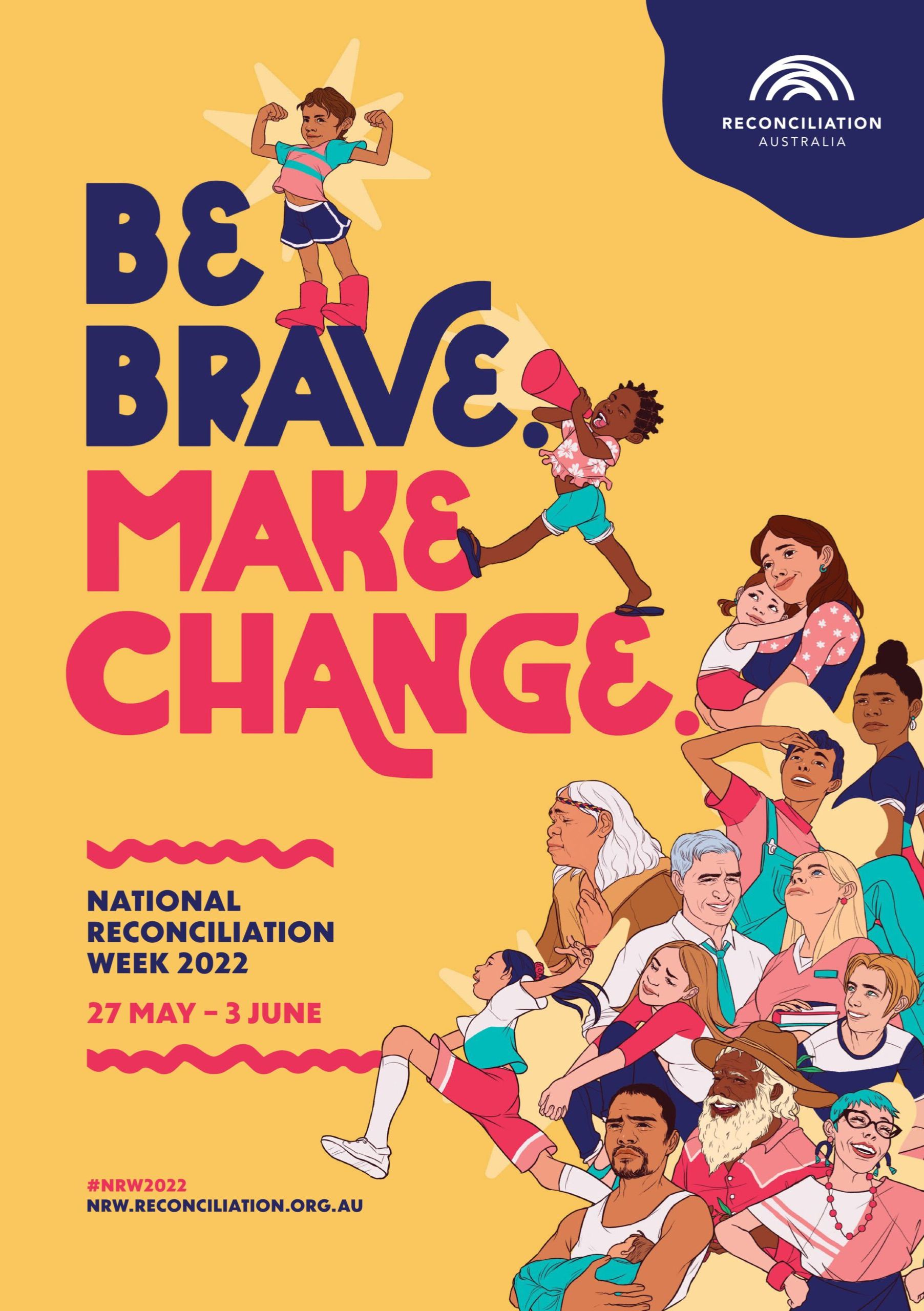
Despite the disappointing result, the fact that more than 6 million Australians voted Yes for a Voice to Parliament proved there remained a widespread desire for truth, justice and reconciliation.
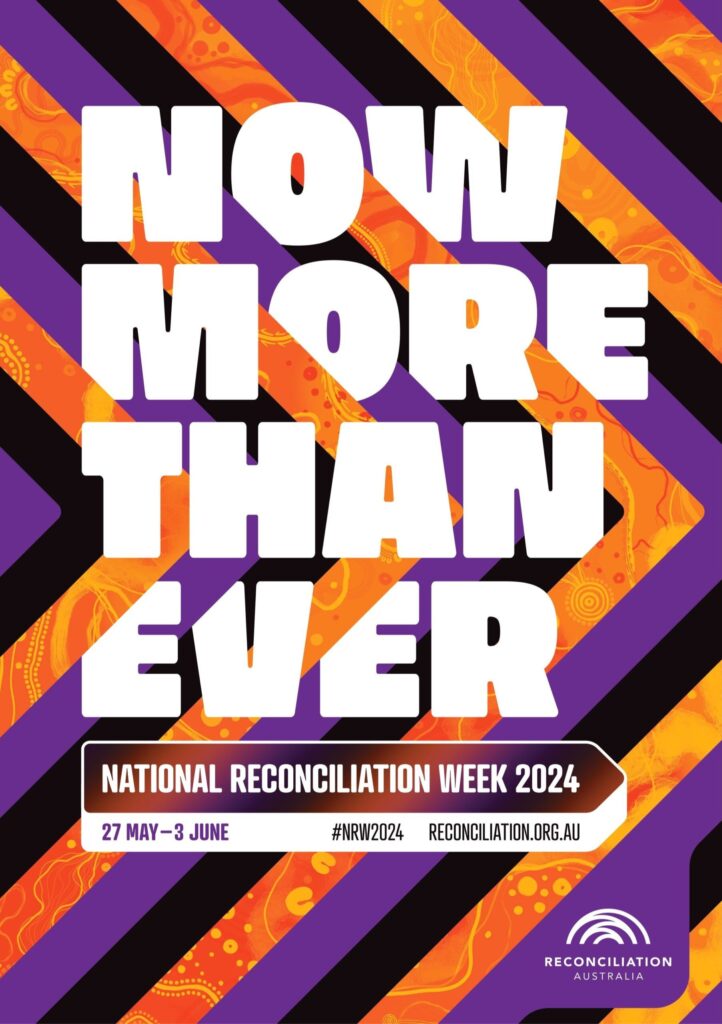
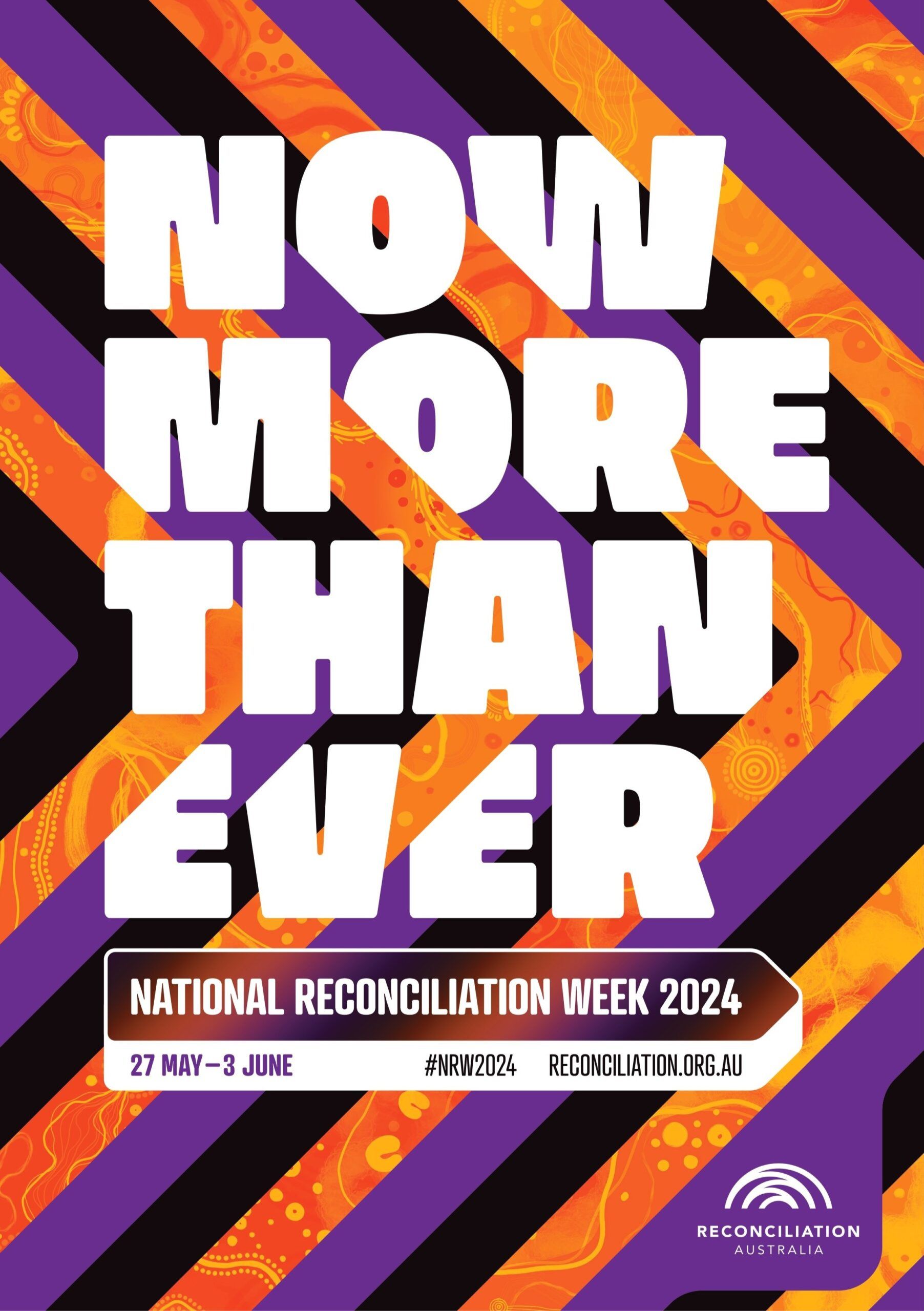
The 2024 theme is a reminder to all of us that no matter what, the fight for justice and the rights of Aboriginal and Torres Strait Islander people must continue.
The National Reconciliation Week 2024 artwork and design represent the momentum of the theme Now More Than Ever. The chevron, a universal symbol for pointing the way, signifies advancing as one as we look towards a reconciled future, and the vibrant artwork of Gubbi Gubbi artist Maggie Douglas encourages connecting with another, understand and continuing to move forward.
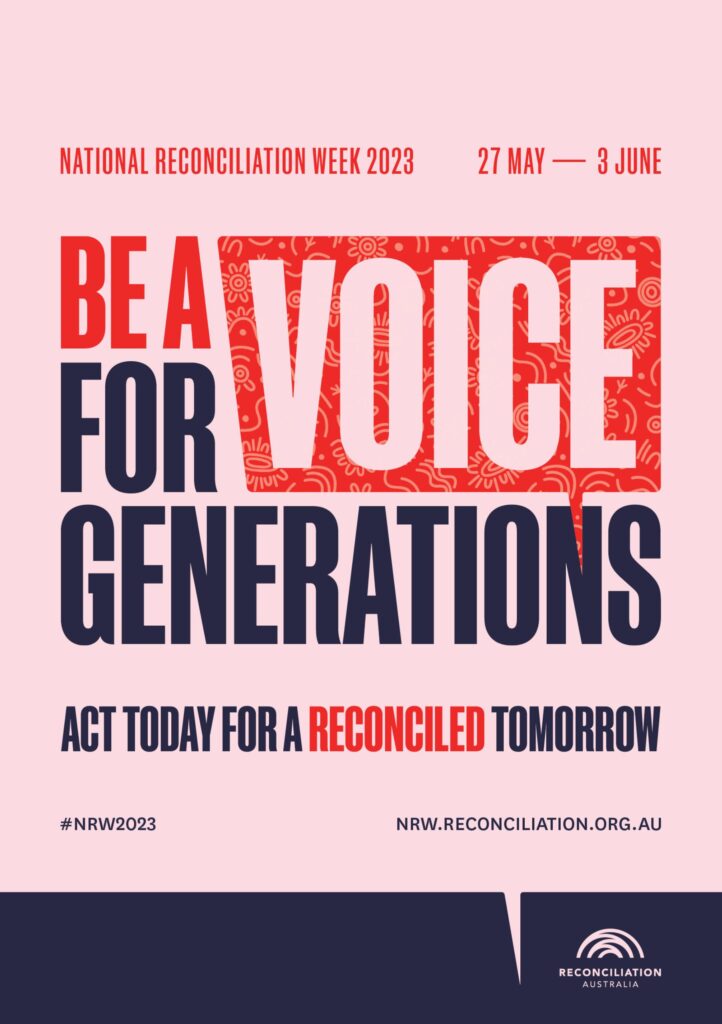
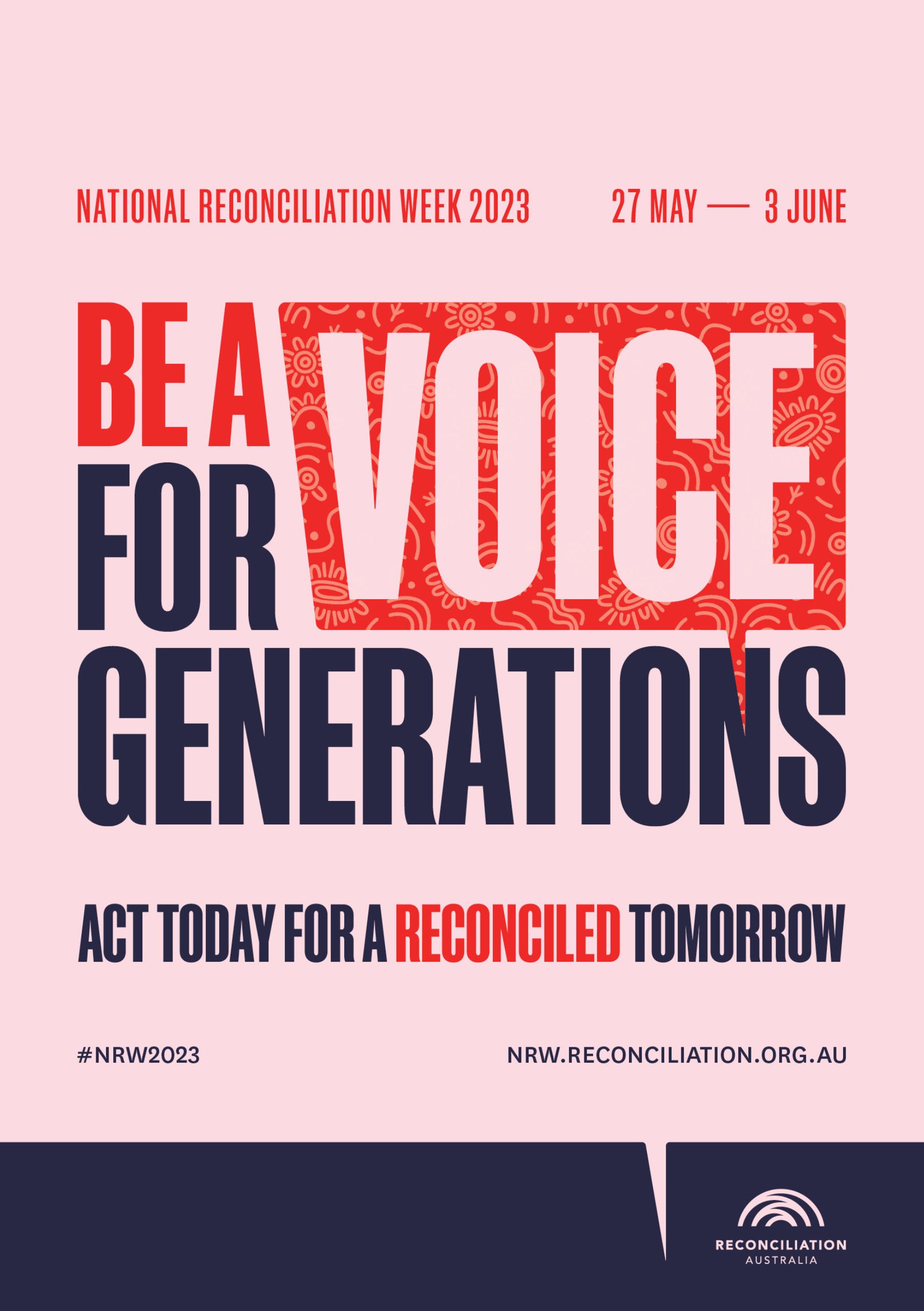
The 2023 theme mirrored campaigns across the country advocating for the Voice, as millions of Australians made their support known. The theme itself was given voice through the Voices for Generations campaign, which united school, work and community choirs and singing groups across the nation in a powerful rendition of Paul Kelly and Kev Carmody’s seminal From Little Things Big Things Grow.
The Voice to Parliament referendum was held on 14 October 2023 and was unsuccessful. About 40% of voters said Yes, and about 60% said No.
The report traced the history of the Stolen Generations, the ongoing impacts on and grounds for reparations for survivors, and the systemic issues affecting Aboriginal and Torres Strait Islander people and governance that contributed – and still contribute – to what the report called ‘contemporary separations.’
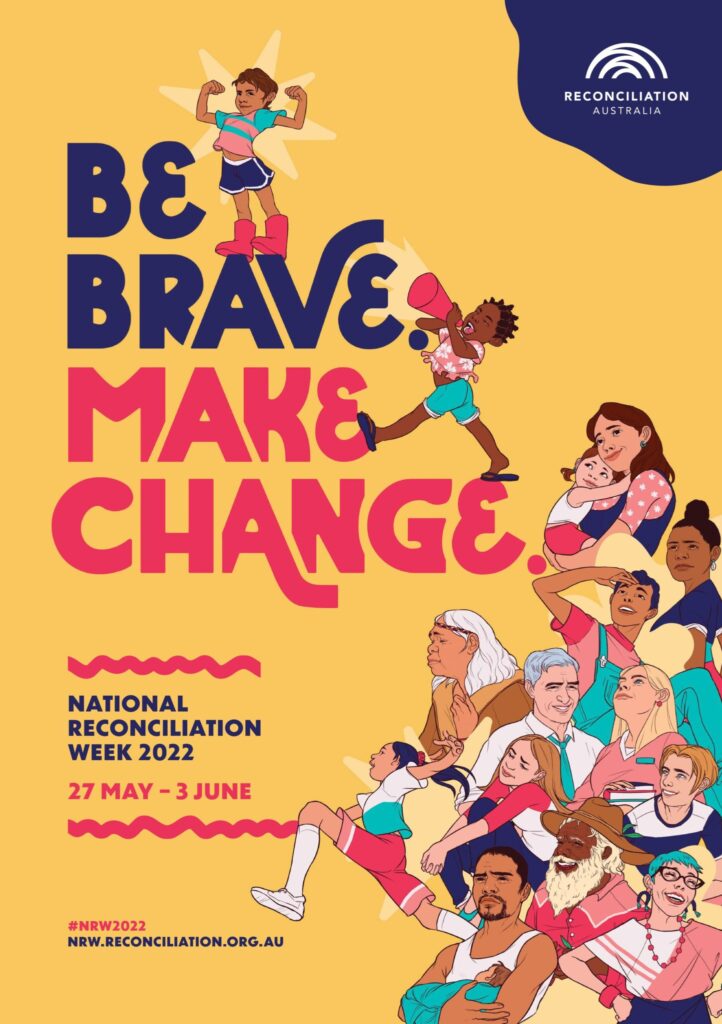
The significance of these events invited Australians to think on the history of the reconciliation movement, to be inspired by the bravery of the past to make positive change for the future, tackling the unfinished business of reconciliation.
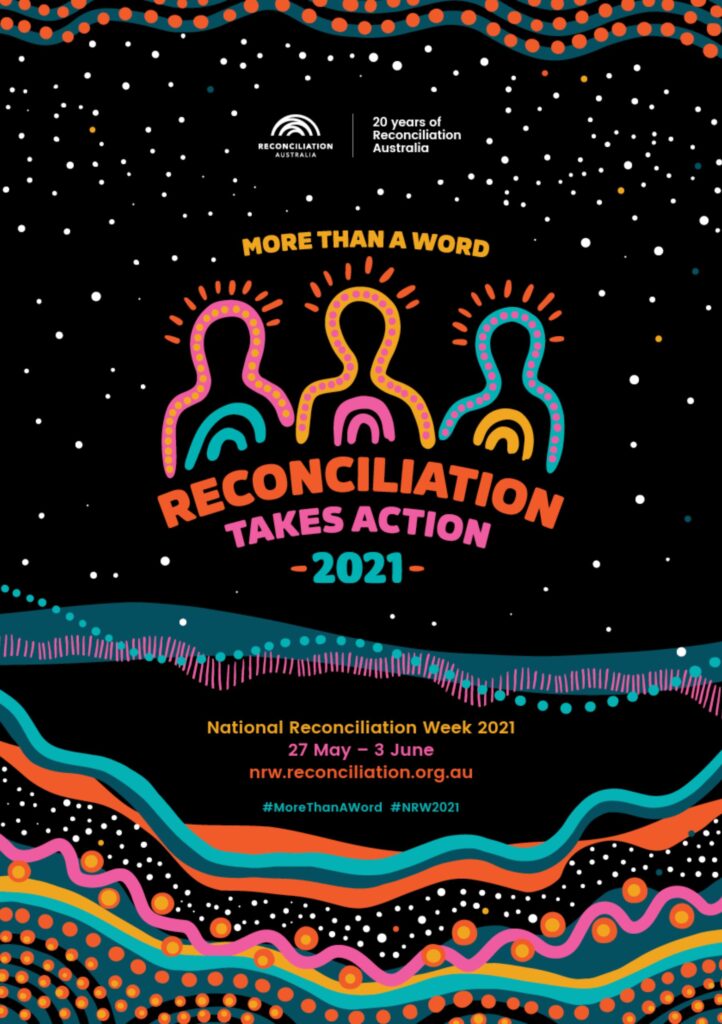
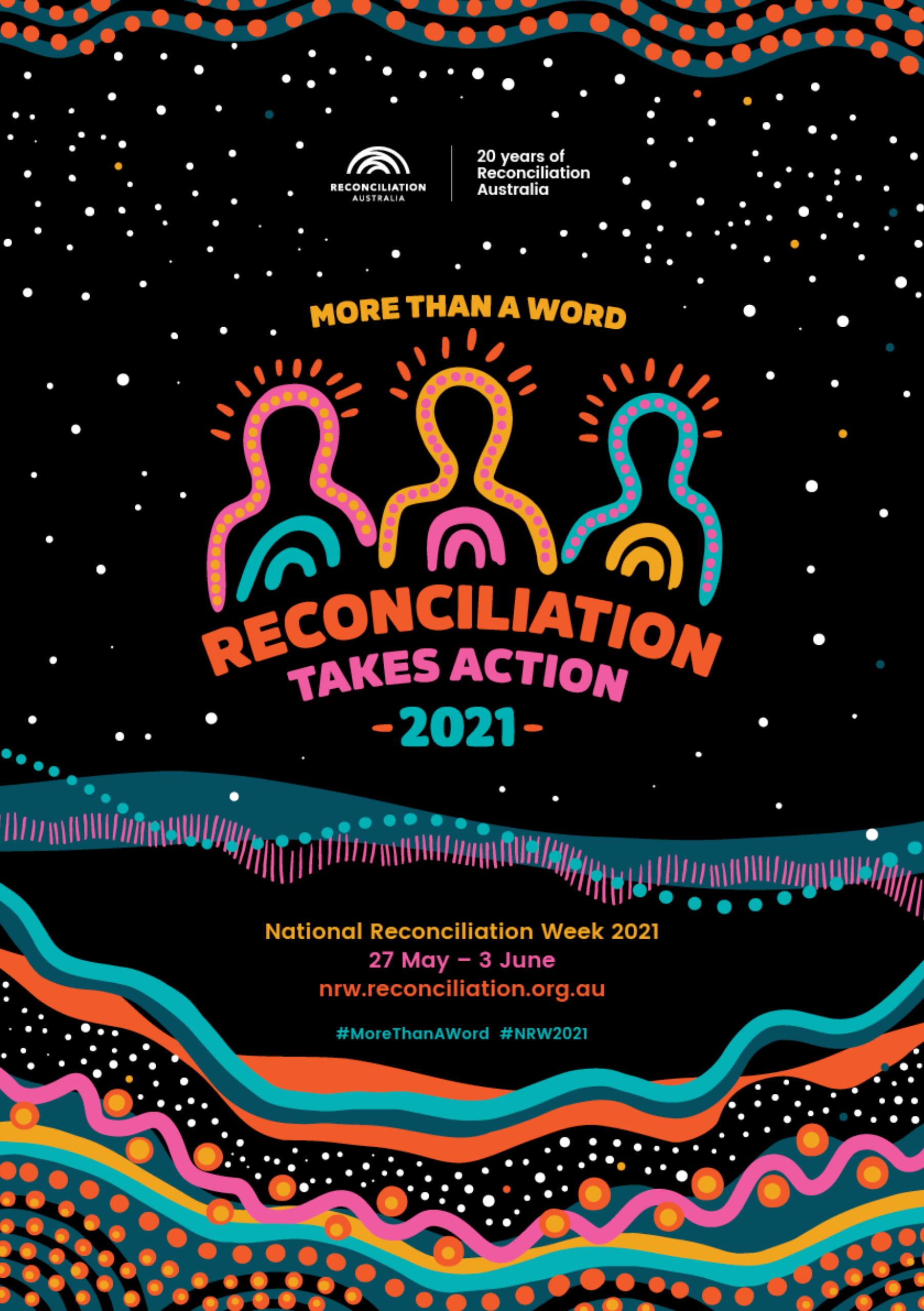
NRW 2021: More than a word. Reconciliation takes action.
The theme for 2021 urged the reconciliation movement towards braver and more impactful action.
2021 marked 20 years of Reconciliation Australia and almost three decades of Australia’s formal reconciliation process. The 2020 Australian Reconciliation Barometer showed greater support for reconciliation from the Australian people than ever before. As history tells us, reconciliation goals can only be achieved through continued and concerted action.
The 2021 artwork by Jessica Johnson, a descendany of the Warumungu/Wombaya people, reflects our connection and mutual obligation to one another, community and country.
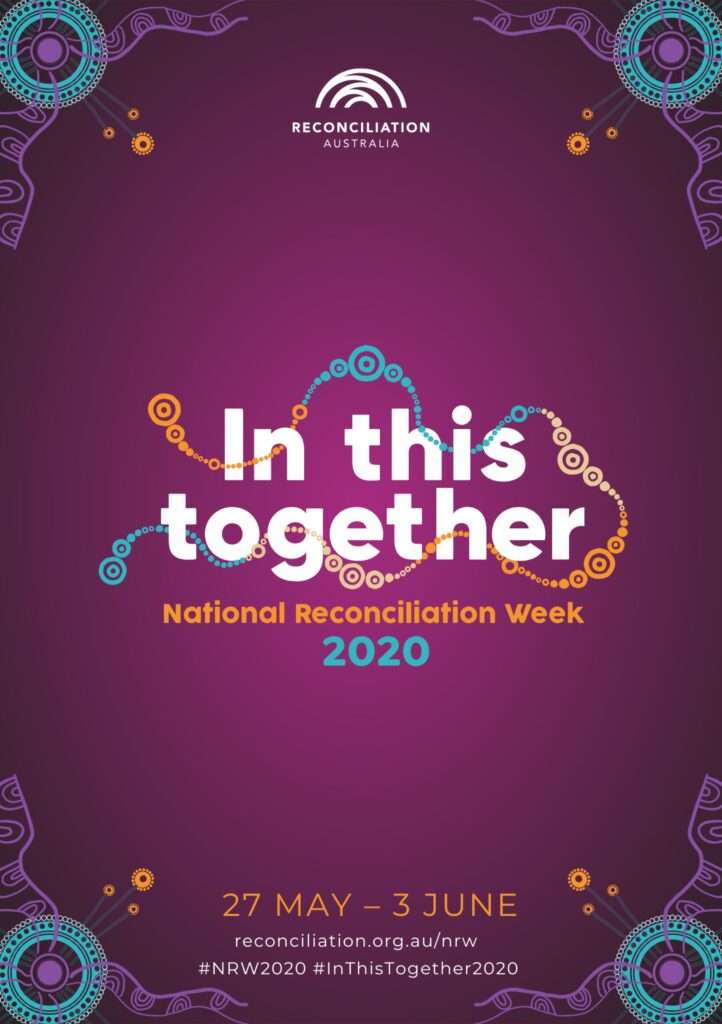
Despite its resonance, the 2020 theme was chosen and announced before the onset of the COVID-19 pandemic.
2020 marked 20 years since the Corroboree 2000 Bridge Walks for Reconciliation, and the theme acknowledged that historic event while reminding us that reconciliation is a collective responsibility now and into the future.
The pandemic was not the only global event the theme resonated with. The Black Lives Matter (BLM) movement had existed for several years before 2020 but on 25 May that year, Black American man George Floyd was murdered by a white police officer in Minnesota. The murder spakred BLM protests in the United States and across the world, including in Australia, where the high rates of Aboriginal and Torres Strait Islander incarceration and deaths in custody were again in the national focus, almost 30 years on from the Royal Commission into Aboriginal Deaths in Custody.
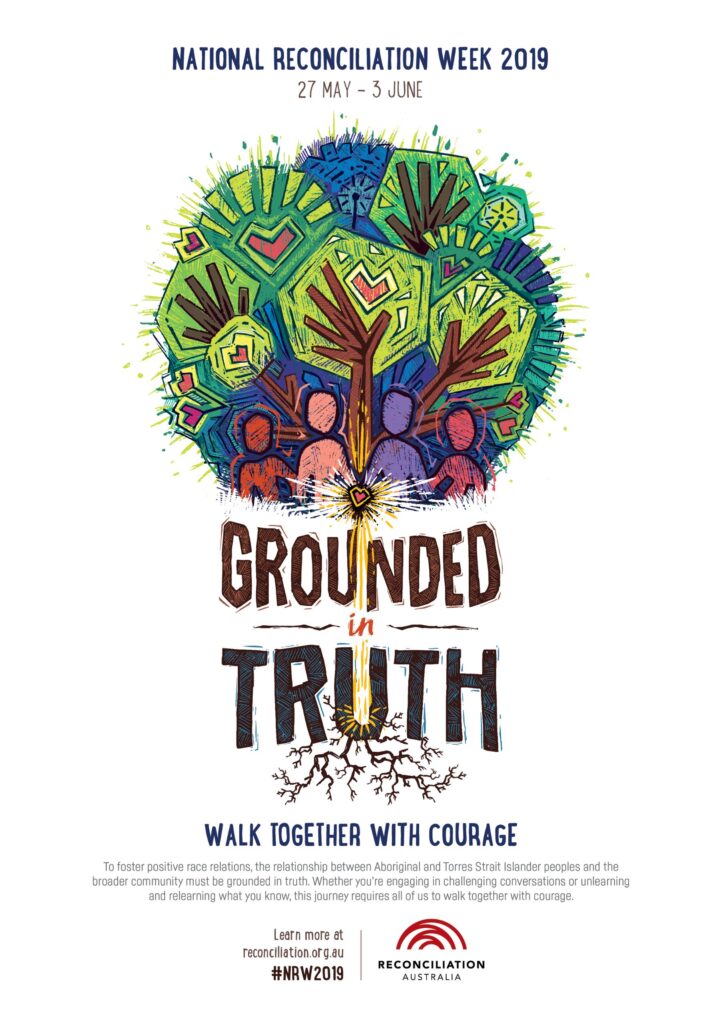
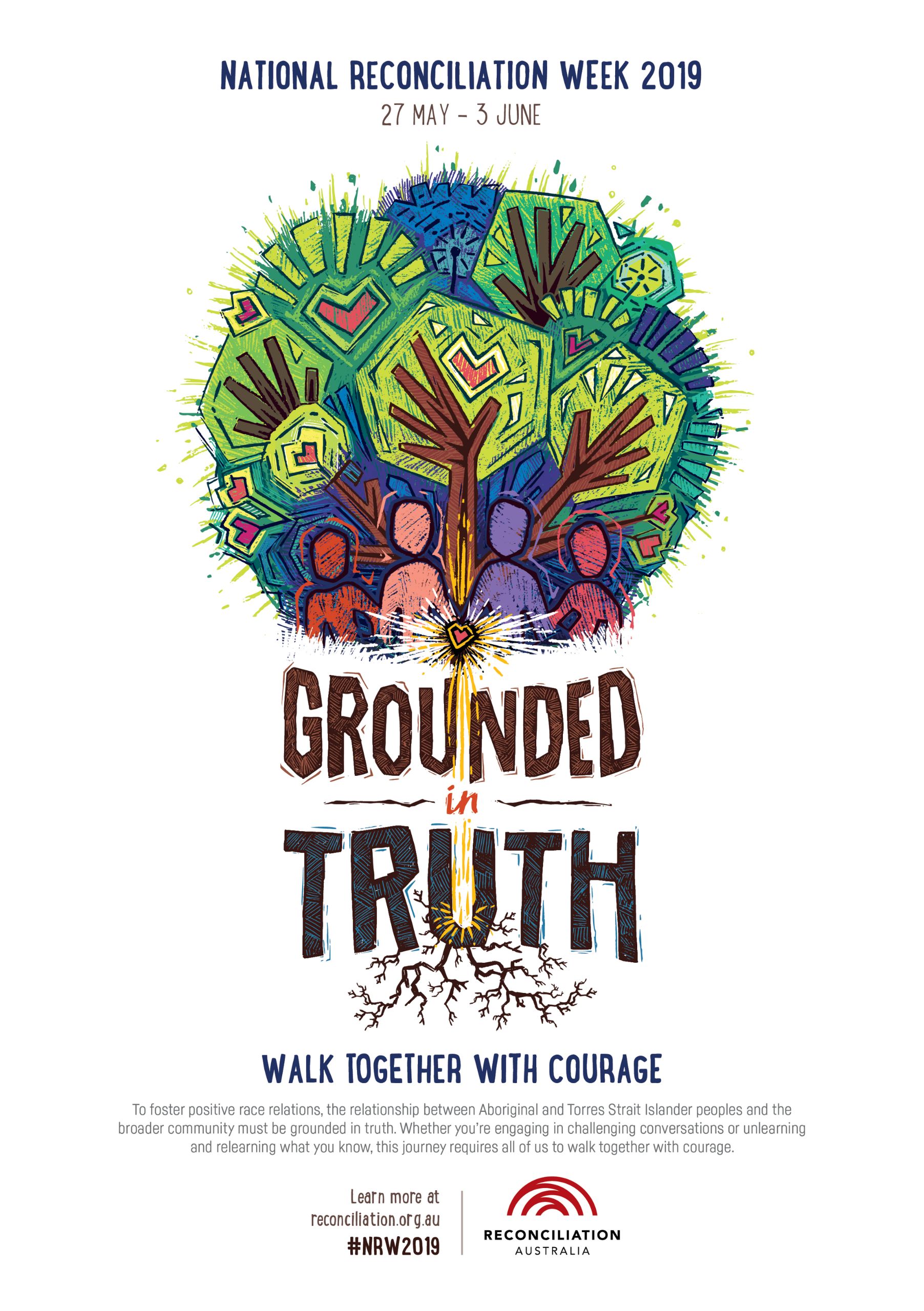
NRW 2019: Grounded in Truth, Walk Together with Courage
The 2019 theme reminded Australians that trust and truth are the basis for all strong and equitable relationships.
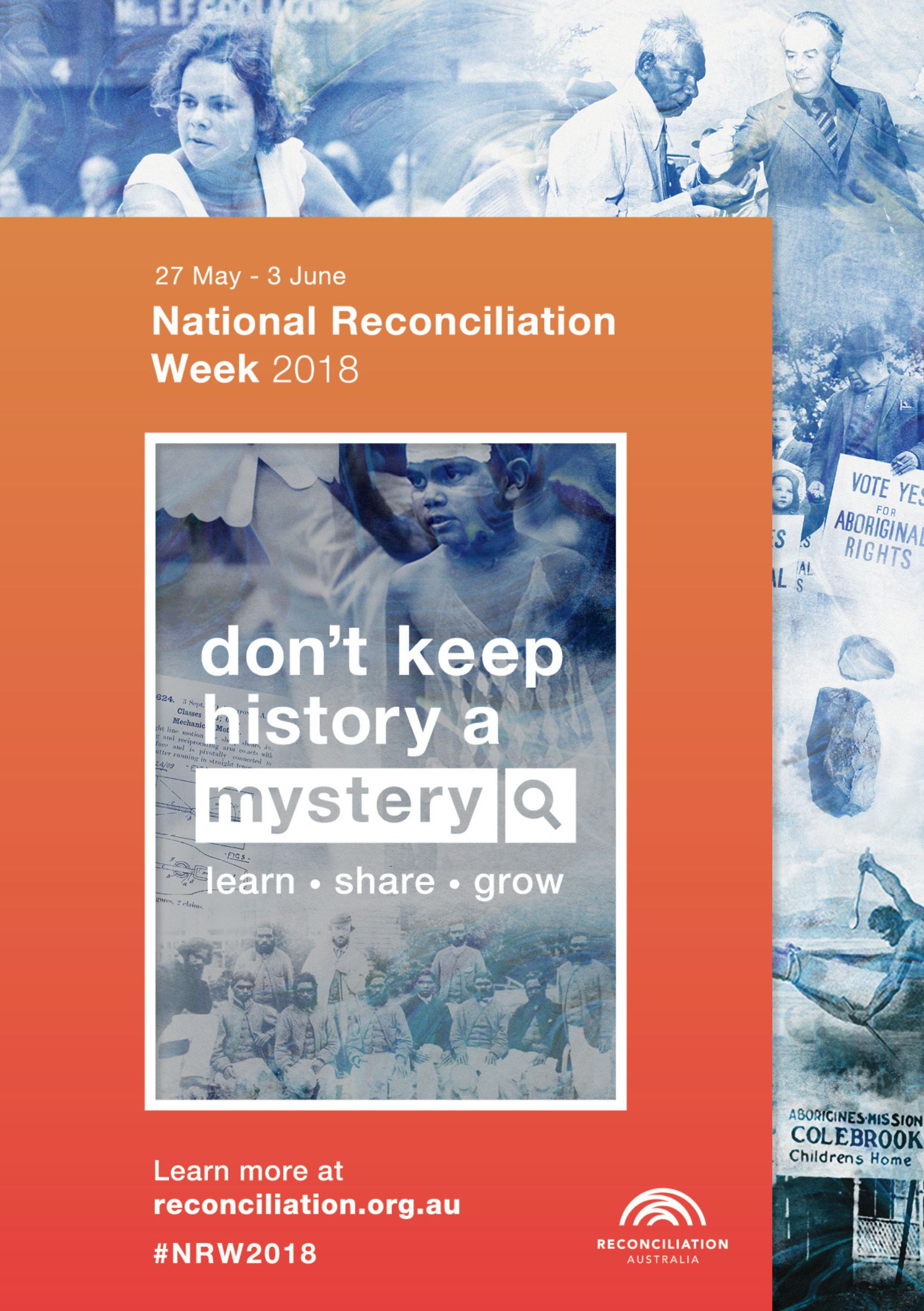
The results of the 2018 Australian Reconciliation Barometer showed that Australians agreed that there should be a comprehensive process of truth-telling about the nation’s colonial history.
The 2019 theme encouraged Australians to engage in challenging conversations and to walk together with courage towards a more reconciled and united nation.
The Council was a bipartisan appointment, formed in 2015 to advise the federal government on the process of Australian constitutional recognition of Aboriginal and Torres Strait Islander peoples and consisted of Indigenous and non-Indigenous members.
The Uluru Statement called for a First Nations Voice to Parliament to be enshrined in the Australian Constitution and for a Makarrata Commission to ‘supervise a process of… truth-telling about our history.’
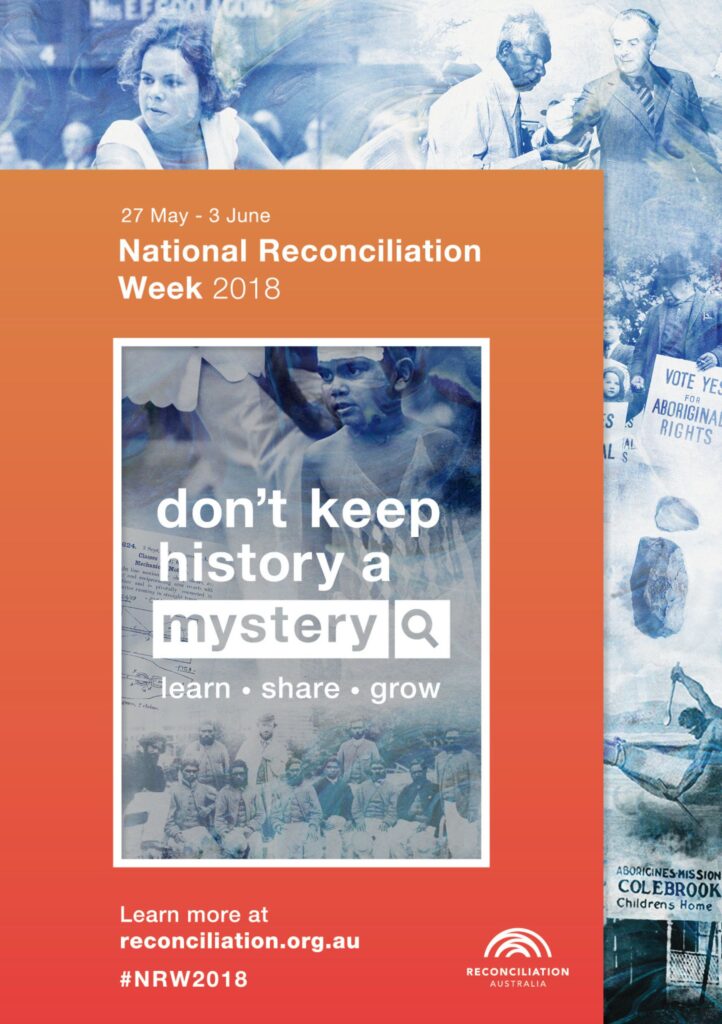
The NRW 2018 theme responded to the Statement, and to the end of the Recognise campaign, by encouraging Australians to actively investigate and tell the truth of Indigenous history in Australia.
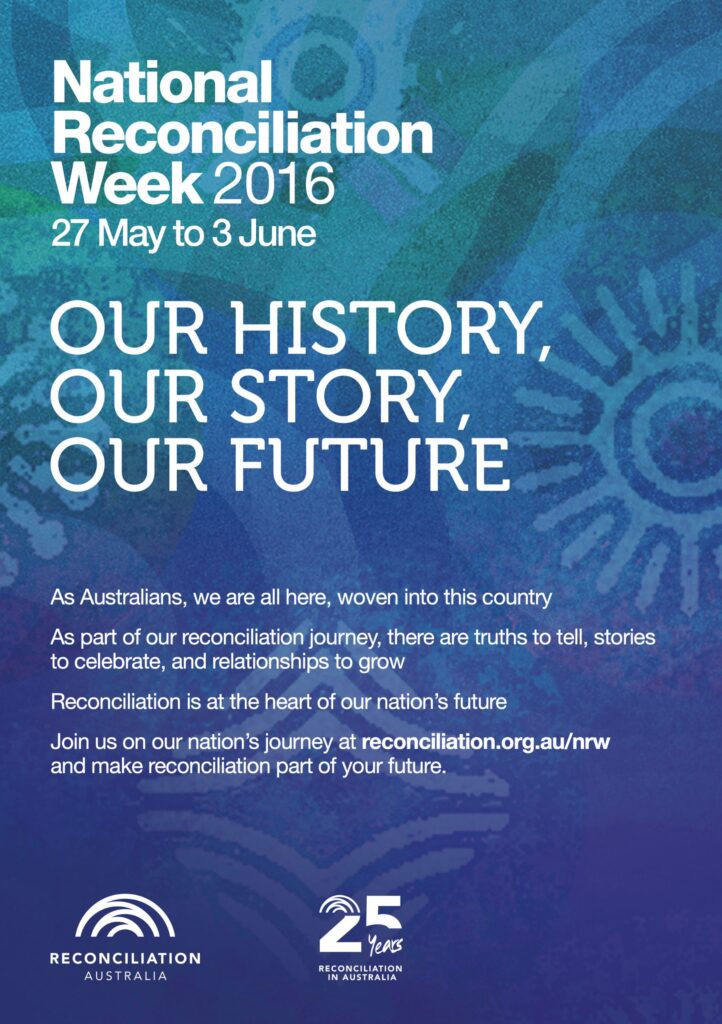
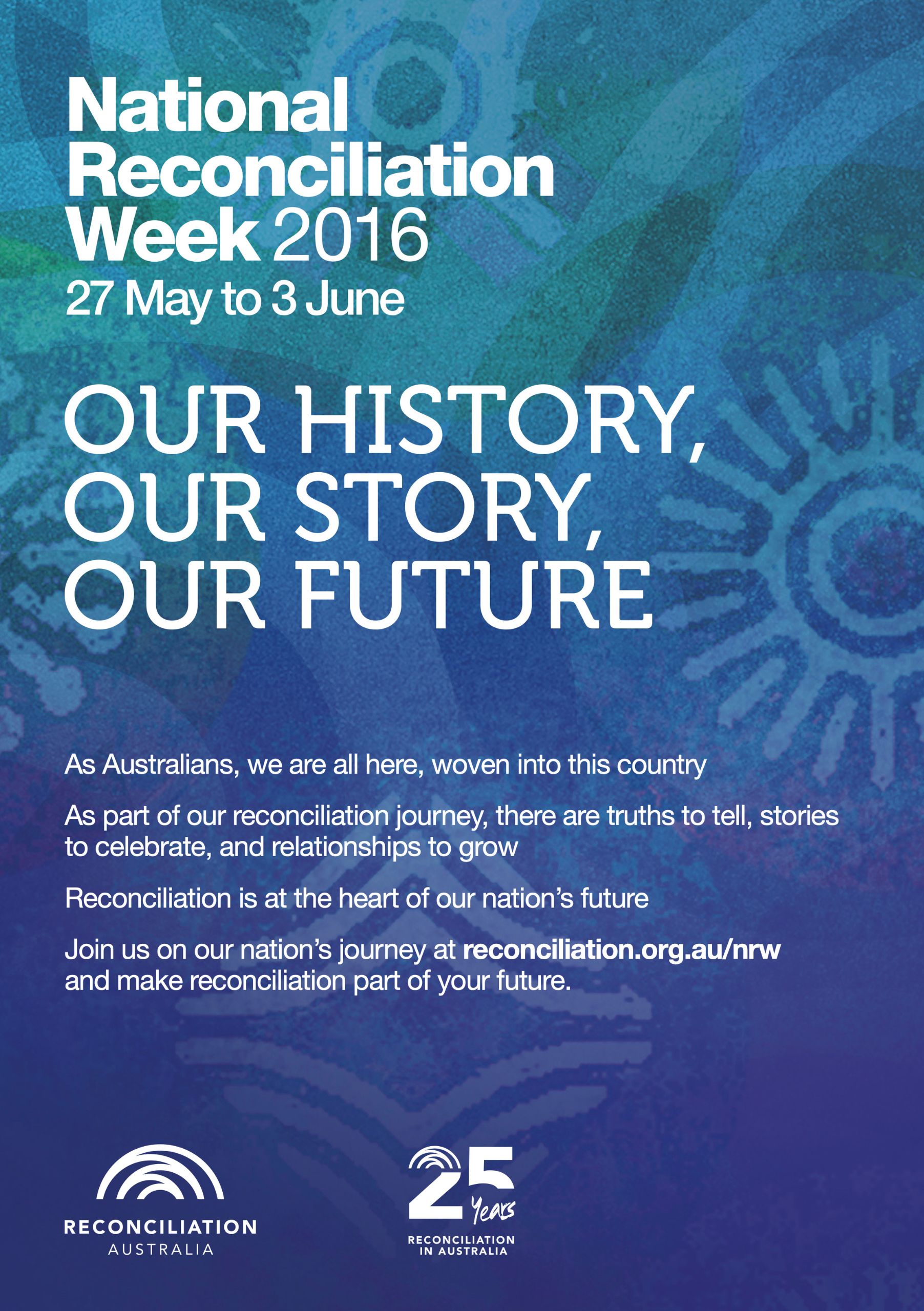
Our History, Our Story, Our Future was derived from the 2016 State of Reconciliation report, which asked all Australians to reflect on our national identity and the place of Aboriginal and Torres Strait Islander histories, cultures and rights in our nation’s story.
Our History reminded us that historical acceptance is essential to our reconciliation journey.
OurStory highlighted that the journey towards reconciliation forms a significant part of Australia’s story, as do the stories of both trauma and triumph told by Aboriginal and Torres Strait Islander peoples. It also encouraged all of us to make reconciliation part of our own stories.
Our Future reinforced that reconciliation must live in the hearts, minds and actions of all Australians we we move forward.
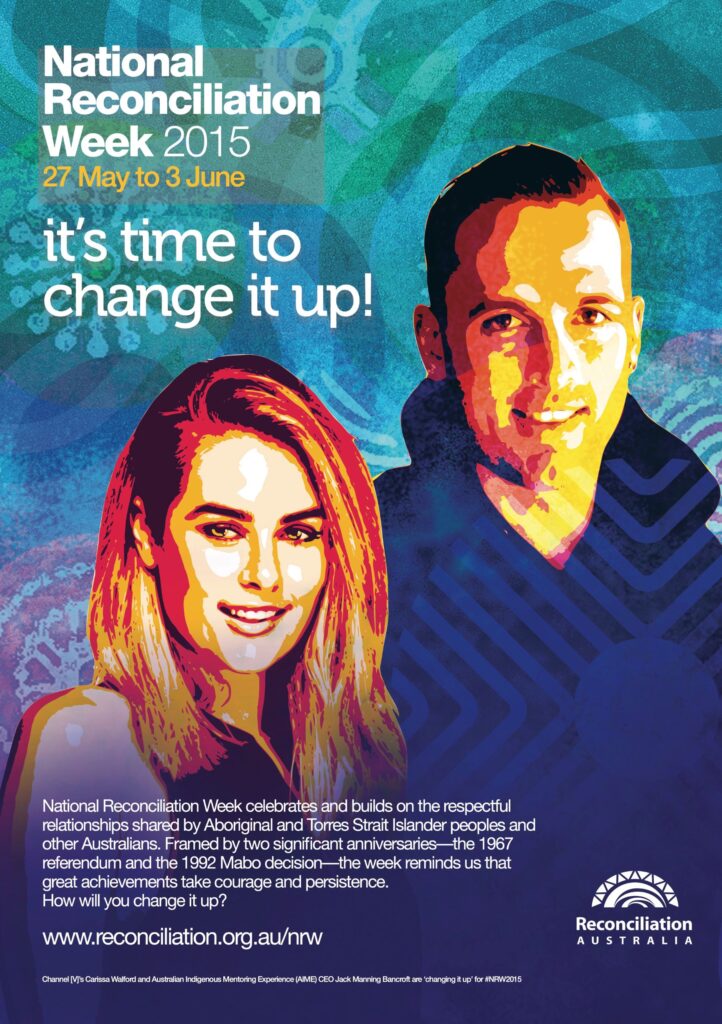
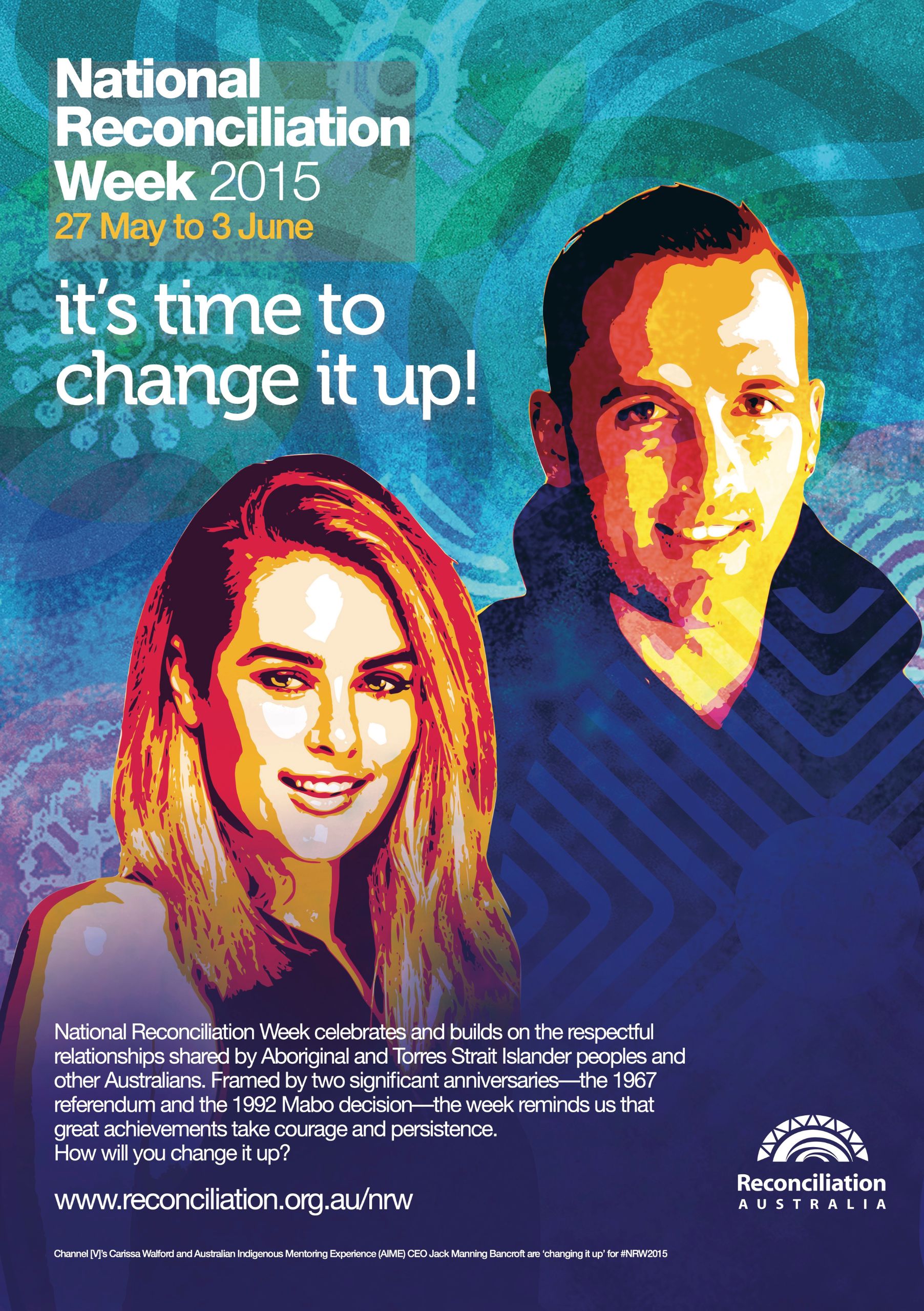
The 2015 theme called on all Australians to be more active in their reconciliation efforts, moving from interested observers to involved participants.
It’s time to change it up! encouraged a national conversation about real change, like recognising Aboriginal and Torres Strait Islander people in the Constitution, sharing cultures, celebrating the contributions of First Nations people, stopping racism and putting an end to discrimination.
The theme could be applied in range of ways across schools, workplaces, sports clubs and community events. It inspired all Australians to take action to positively change things up in their day-to-day lives.
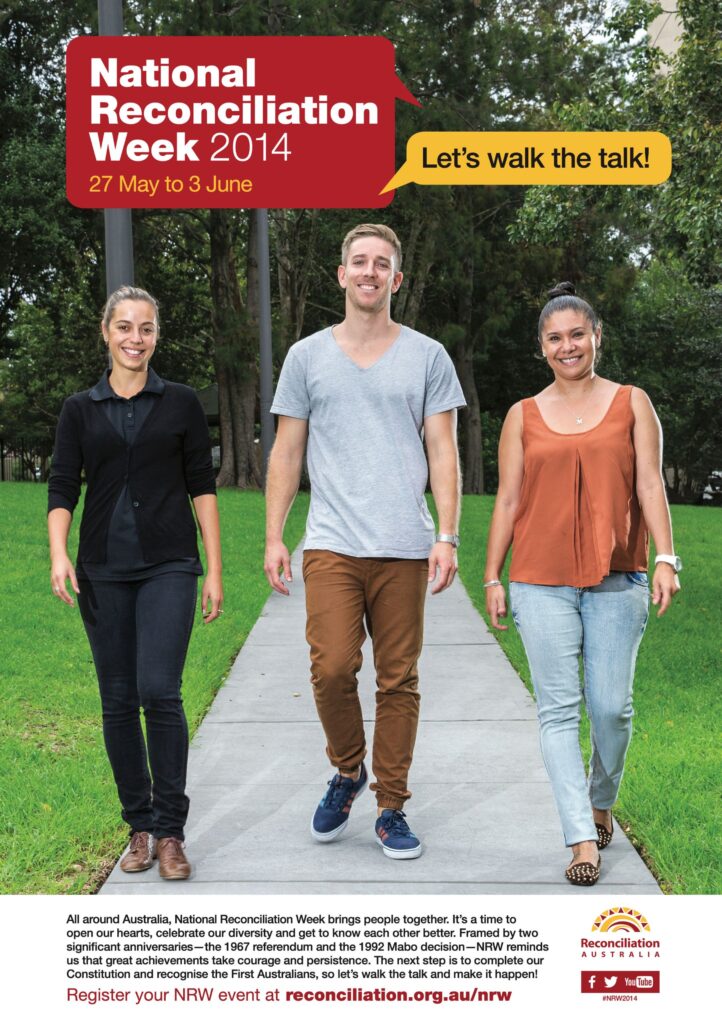
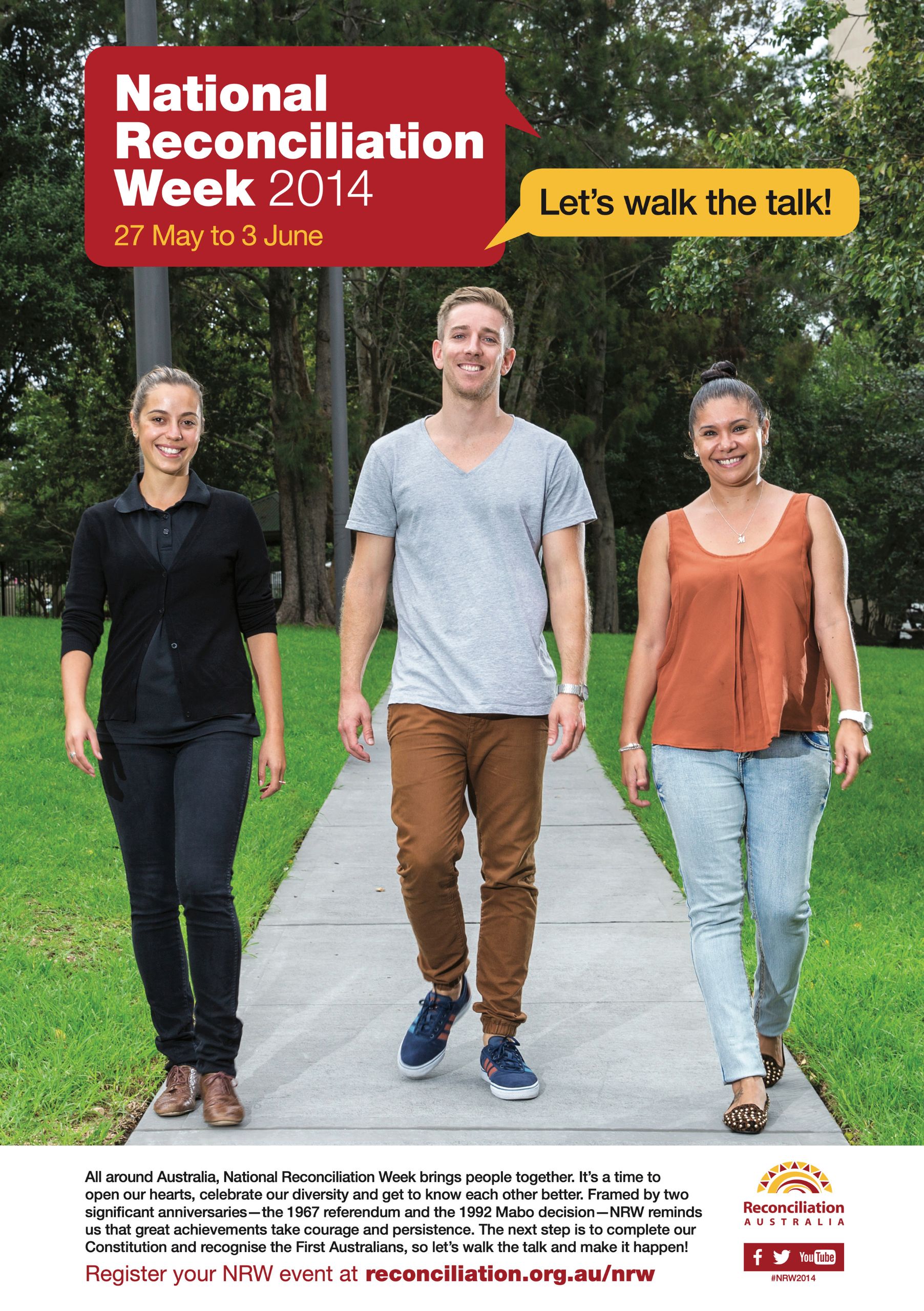
The 2014 theme urged people to do more than talk about reconciliation, but to take action in their families, communities and workplaces.
Following the racist abuse leveled at 2014 Australian of the Year and AFL legend Adam Goodes, football fans and clubs alike took quick and decisive action to support Goodes and condemn racism across the country. This response and others like it were evidence that Australia increasingly rejects and condemns racism.
Let’s walk the talk! continued calls for people to take action by signing up for the Recognise campaign – to get Aboriginal and Torres Strait Islander people recognised in the Australian Constitution – to do their part in a national commitment to reconciliation.
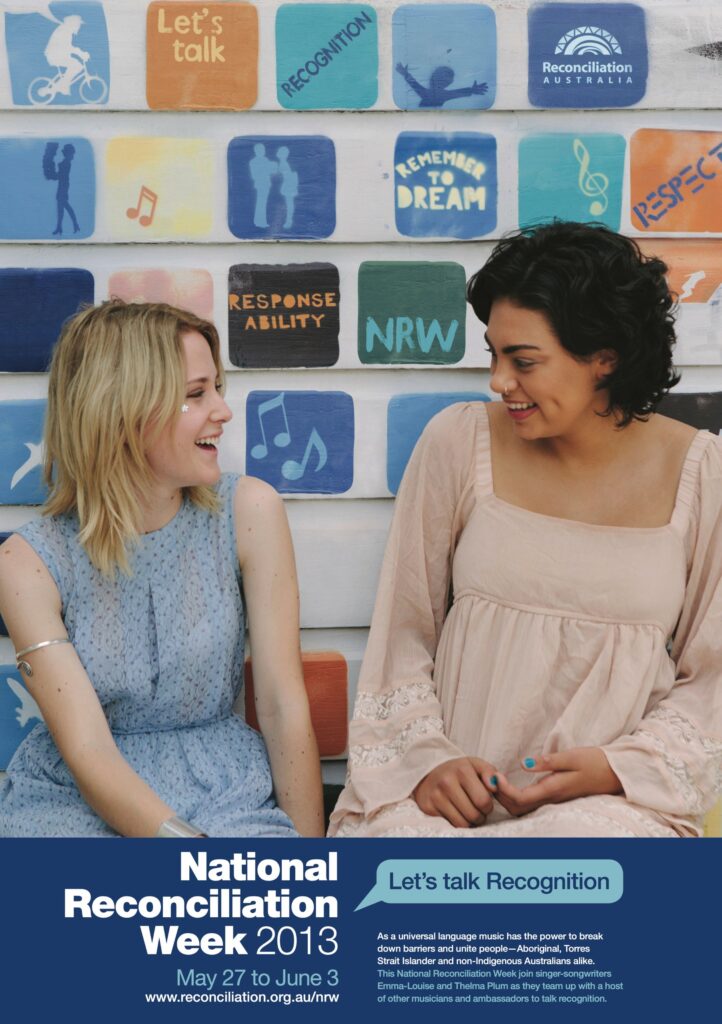
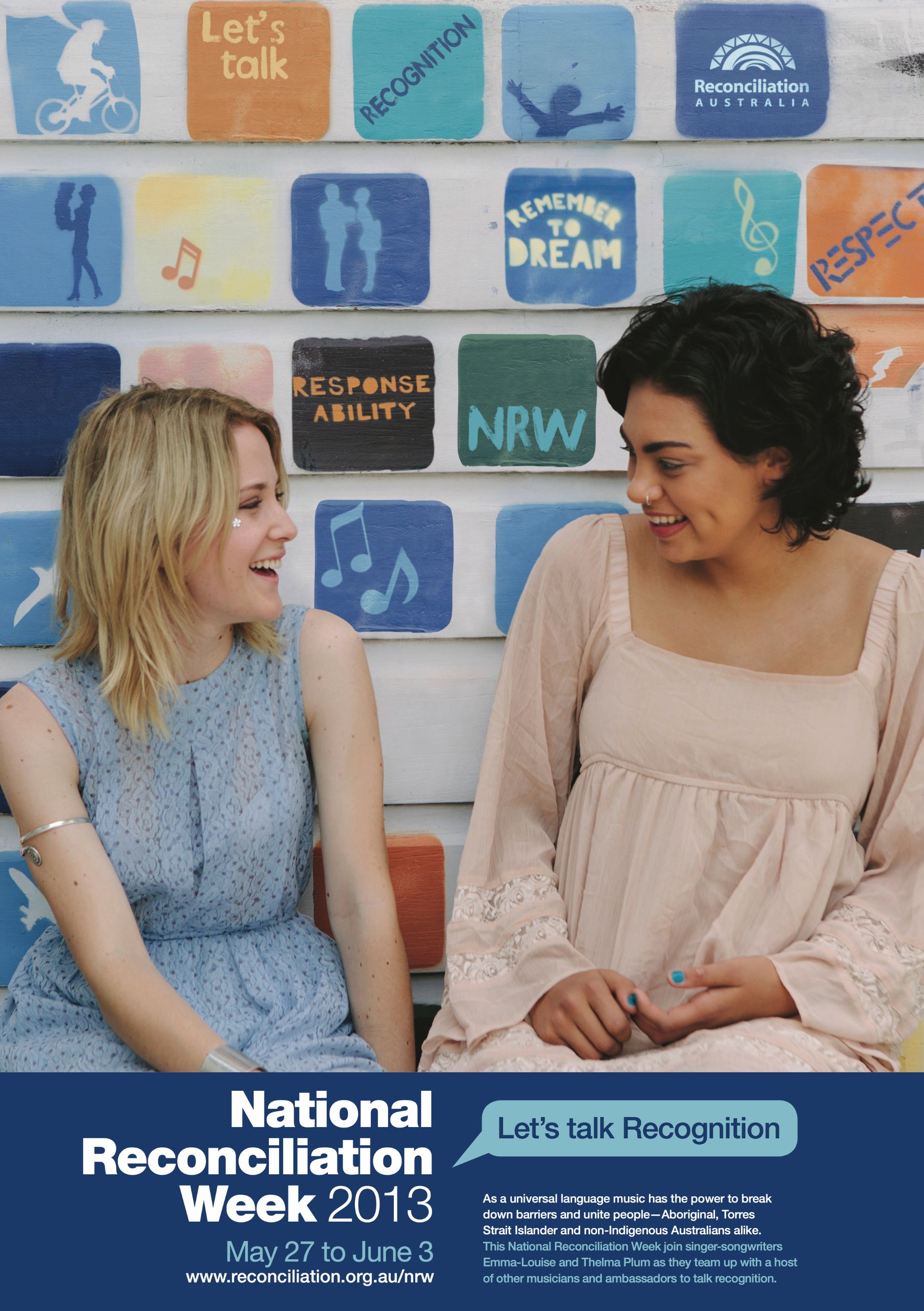
NRW 2013 continued the focus on constitutional recognition for Aboriginal and Torres Strait Islander peoples – part of the ongoing Recognise campaign – while encouraging Australians to recognise one another’s cultures, histories and stories in their everyday lives.
Singers Emma-Louise (left) and Thelma Plum featured on the poster and advocated as ambassadors for reconciliation using music, a universal language, to bring people together.
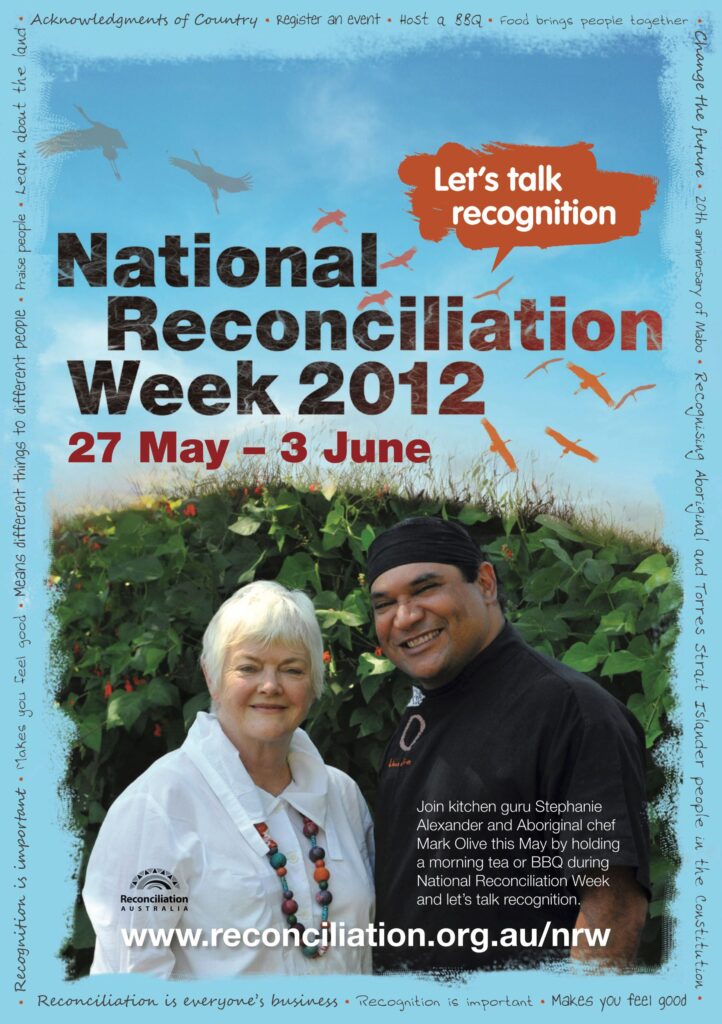
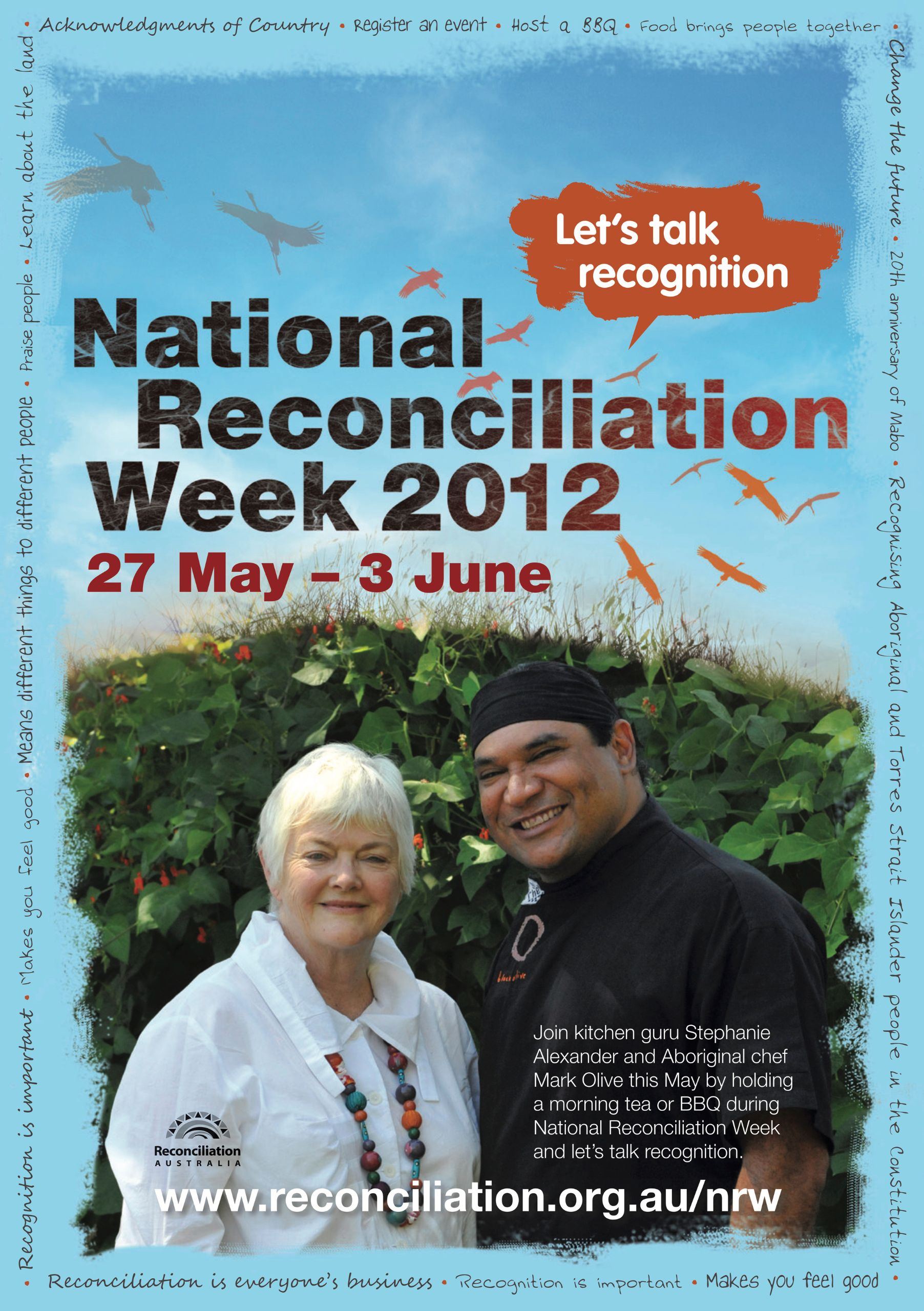
The 2012 theme continued the work of the Recognise campaign by advocating for recognition of Aboriginal and Torres Strait Islander peoples in the Australian Constitution.
The theme encouraged all Australians to think of ways to recognise and celebrate achievements of local First Nations peoples, and to start conversations about the importance of recognition.
The panel recommended a ‘single referendum question in relation to the package of proposals on constitutional recognition of Aboriginal and Torres Strait Islander peoples,’ and, before the referendum was held, ‘a properly resourced public education and awareness program.’
In response, Reconciliation Australia launched the Recognise campaign in 2012.
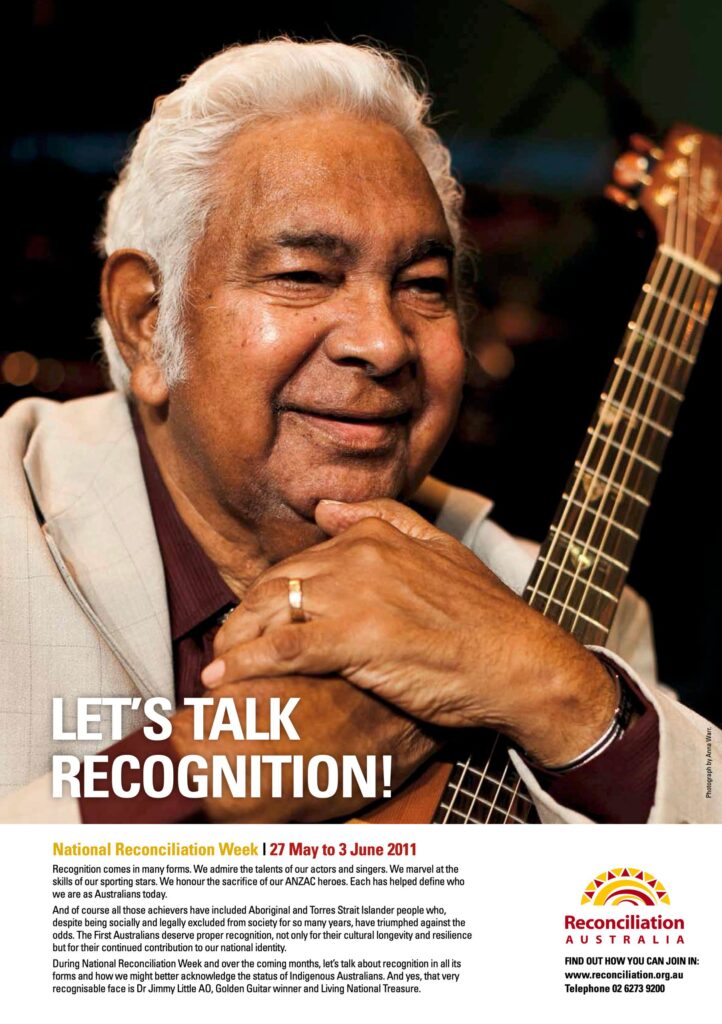
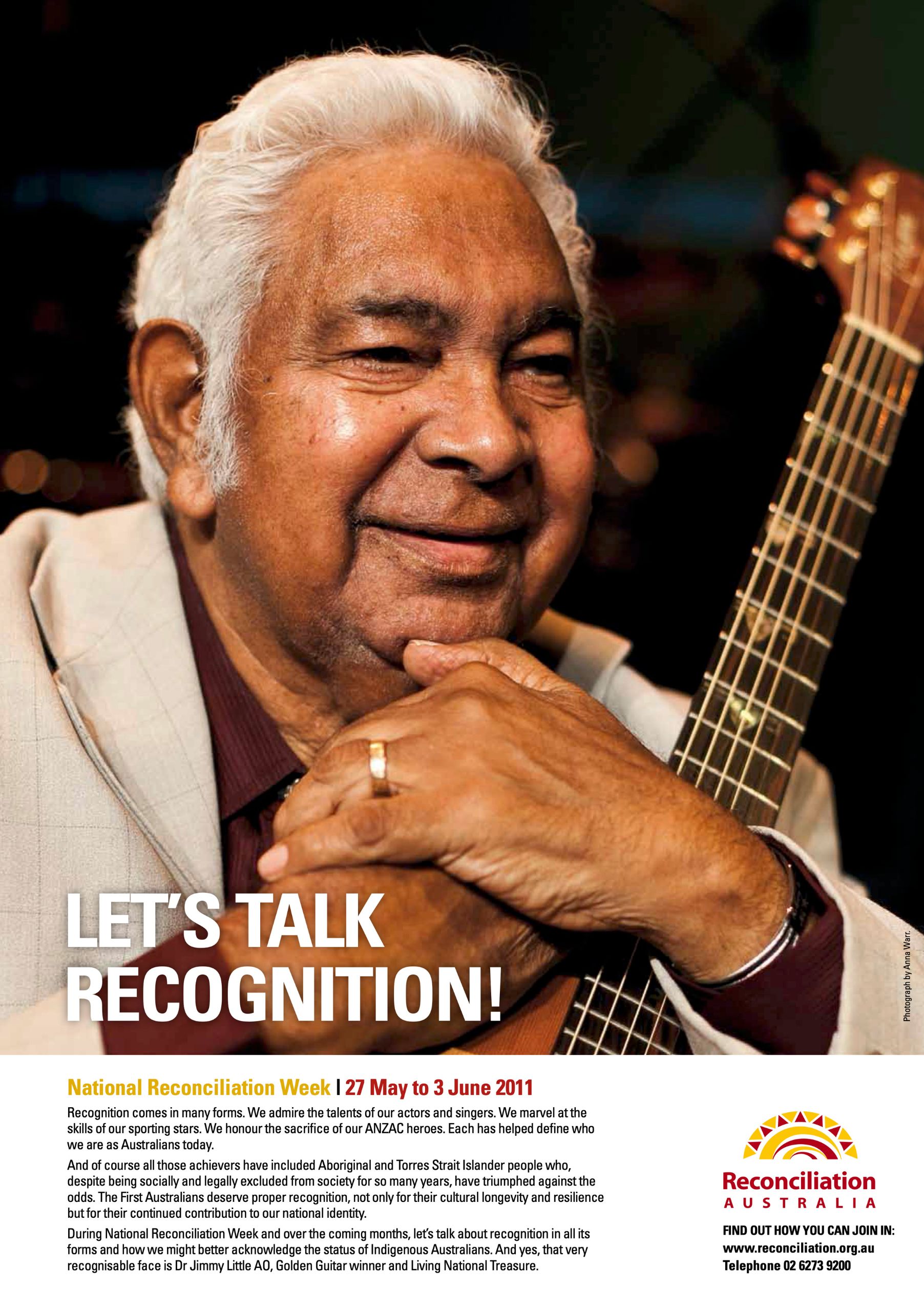
The 2011 poster featured Yorta Yorta singer-songwriter Jimmy Little.
Congress membership was open to Aboriginal and Torres Strait Islander individuals and organisations who together advocated for Indigenous self-determination and the implementation of the United Nations Declaration on the Rights of Indigenous Peoples (UNDRIP). The Congress was represented at multiple UN forums and councils and led the creation of the Redfern Statement.
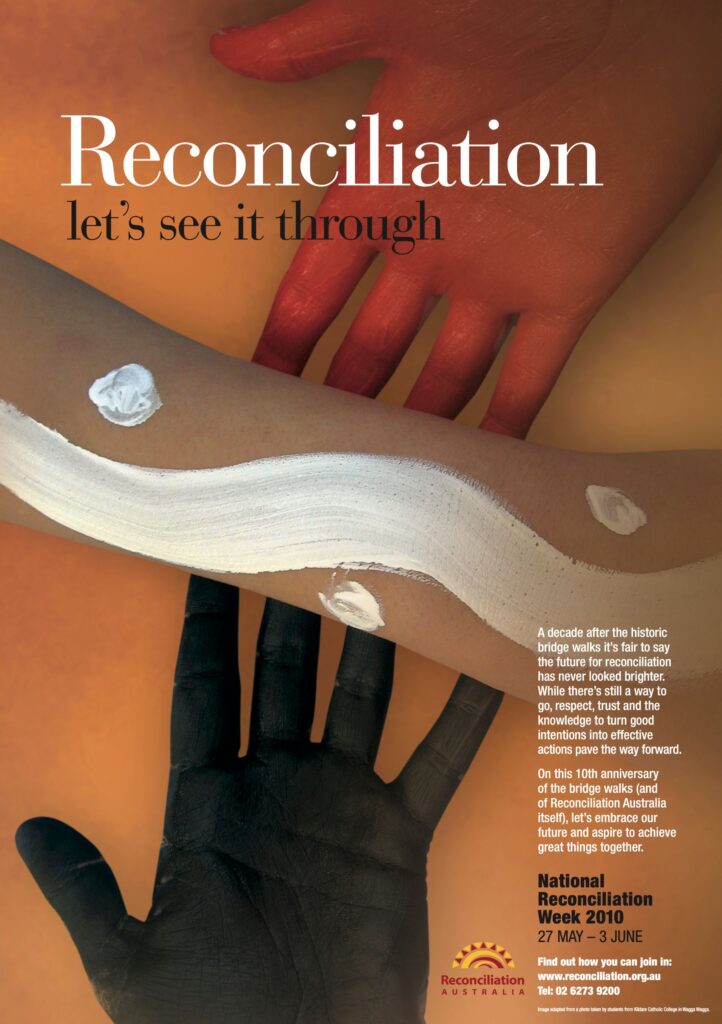
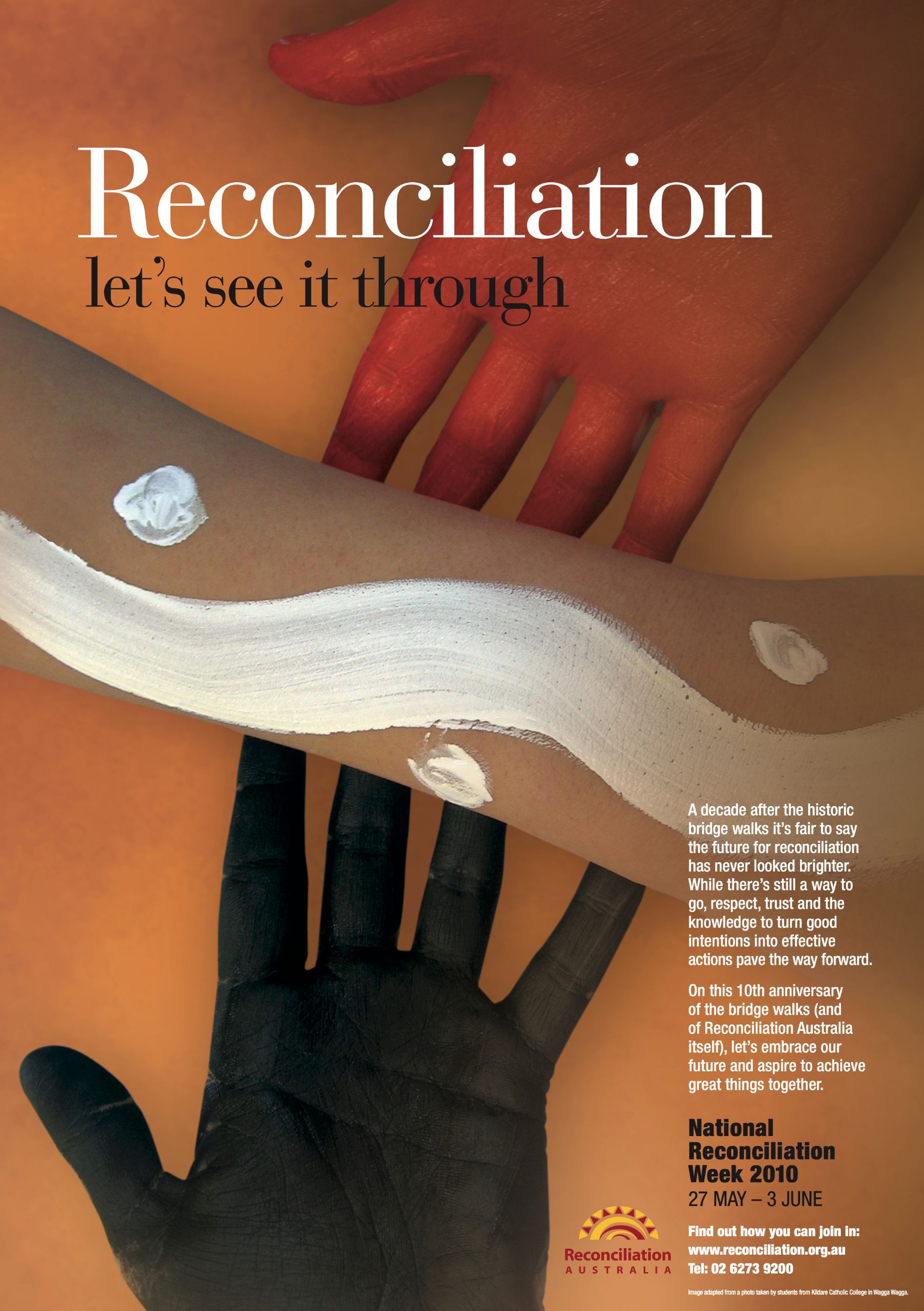
The 2010 theme urged supporters to build on the goodwill of the previous decade and work together to achieve positive outcomes. The poster was adapted from a photo taken by students at Kildare College in Wagga Wagga.
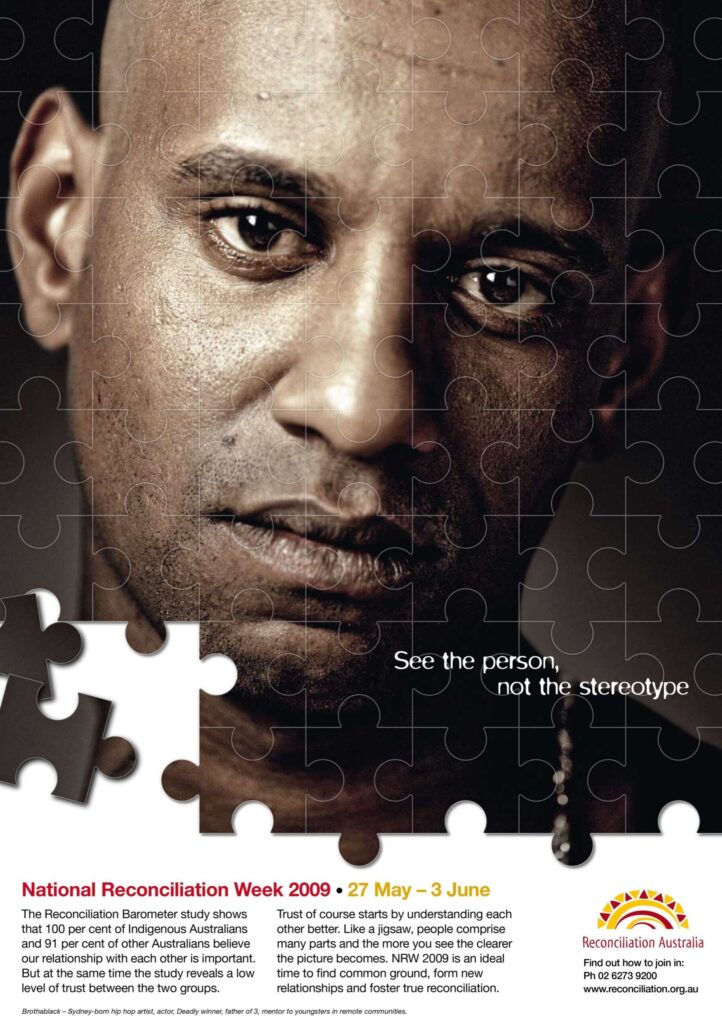
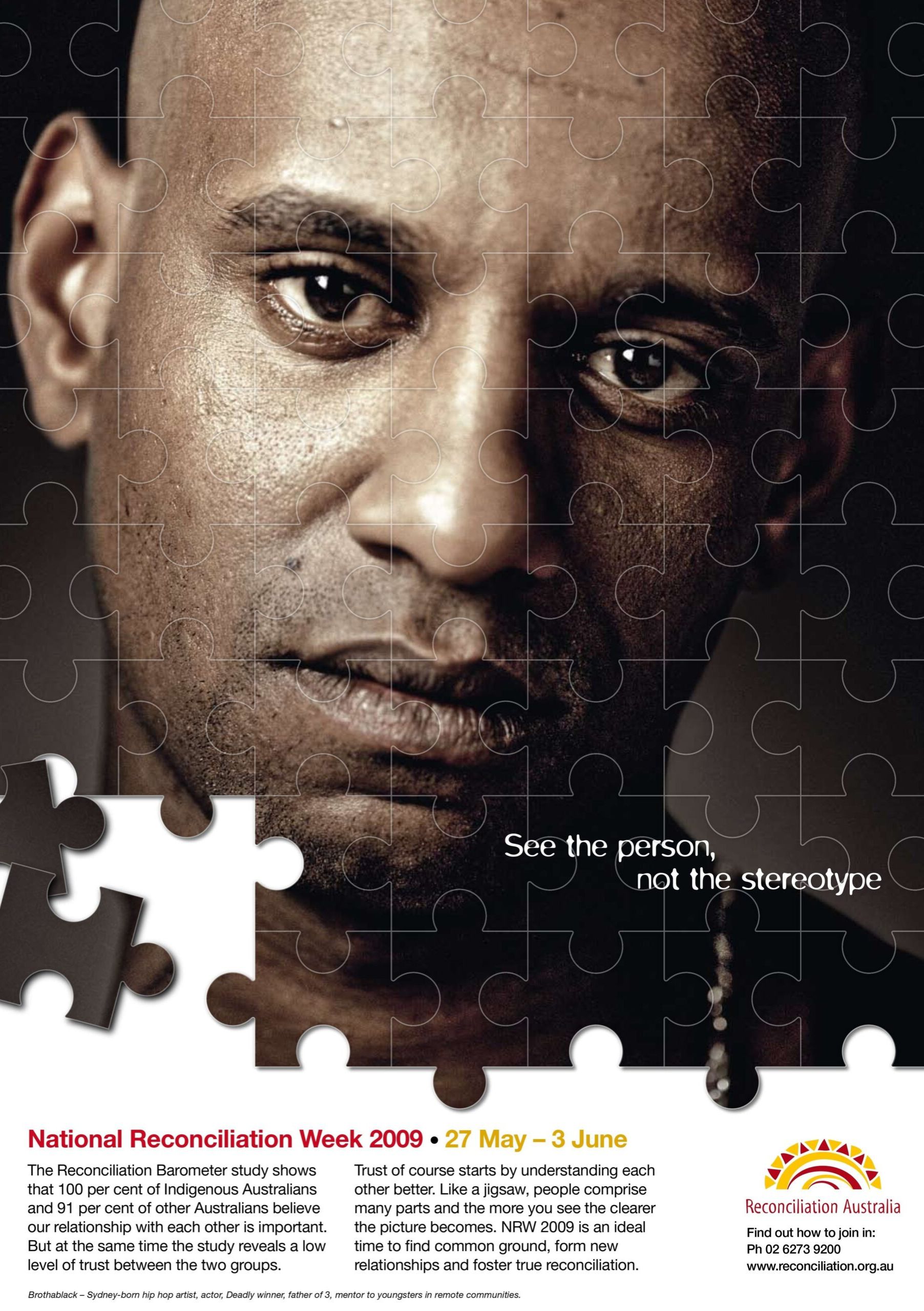
The 2009 theme built on the momentum of the National Apology in 2008 and the first Australian Reconciliation Barometer (ARB) in 2008, still the only national survey measuring the progress of reconciliation between Aboriginal and Torres Strait Islander peoples and non-Indigenous Australians.
The data from the 2008 ARB indicated a widespread belief that the relationship between First Nations and non-First Nations Australians is important and therefore necessary for achieving reconciliation.
The 2009 theme and poster – which featured Indigenous rapper Brothablack – reminded Australians that trust begins with understanding, and that if you cannot know a person if you’re only looking at one small piece of them.
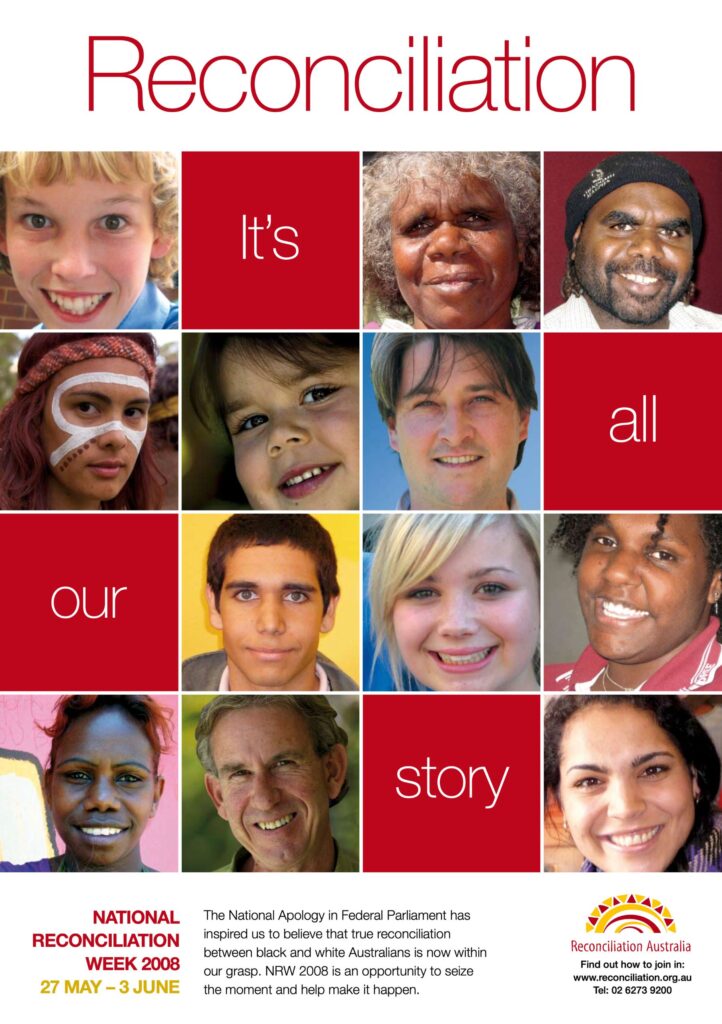
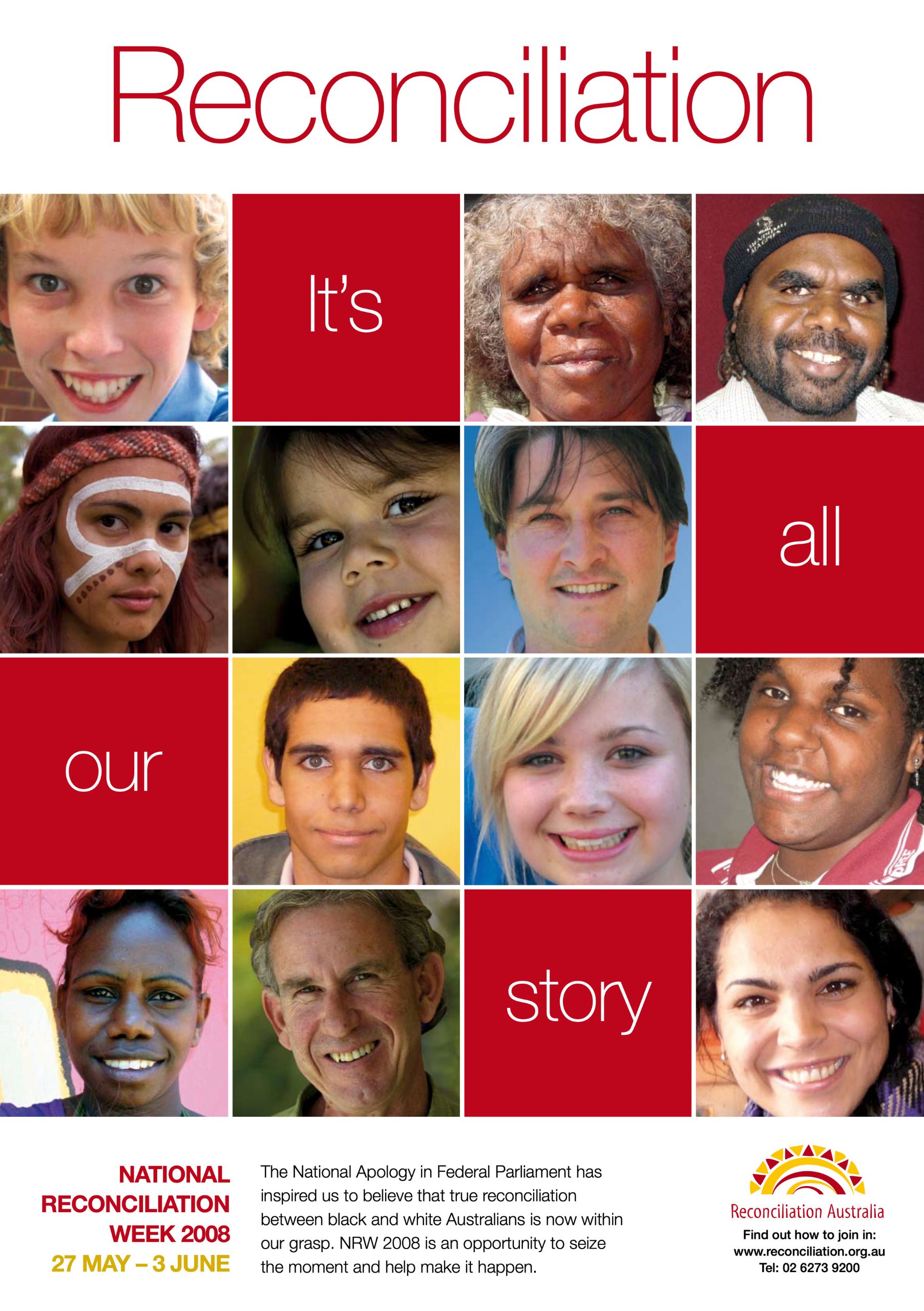
NRW 2008 followed the National Apology to the Stolen Generations delivered by Prime Minister Kevin Rudd on behalf of the Australian Parliament in February of that year.
The formal apology was a pivotal moment in history, as the first formal acknowledgement of the ongoing harm caused by the forced removal of Aboriginal and Torres Strait Islander children throughout the 20th century.
The 2008 theme was a reminder that reconciliation is not an individual journey or the responsibility of one group – it is a shared history and about building a just and equitable future for all Australians.
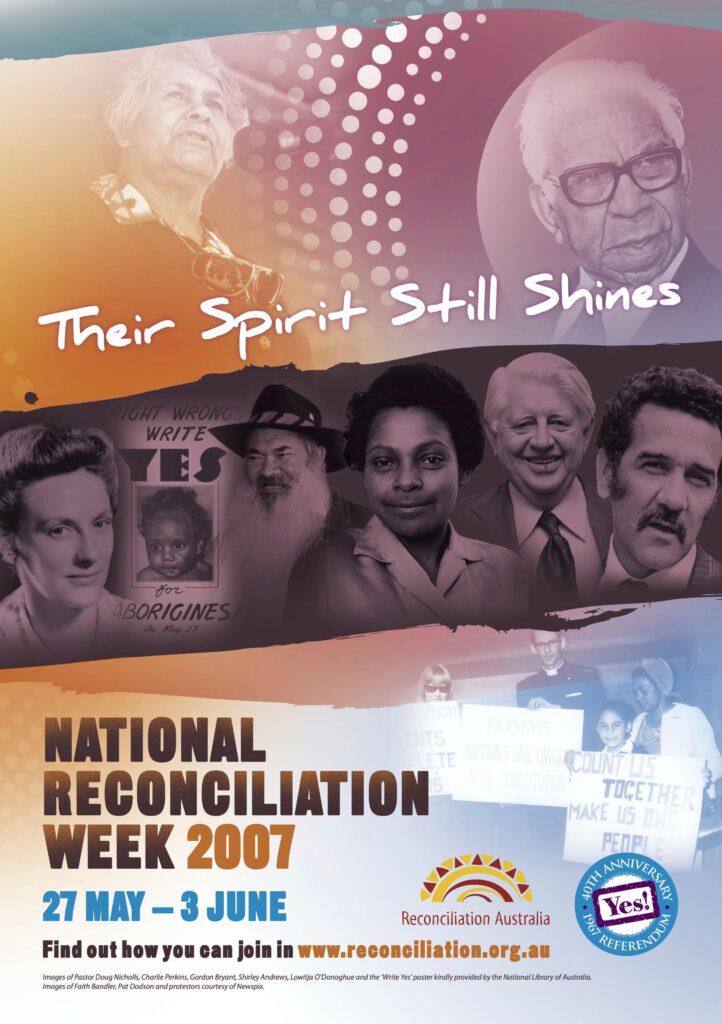
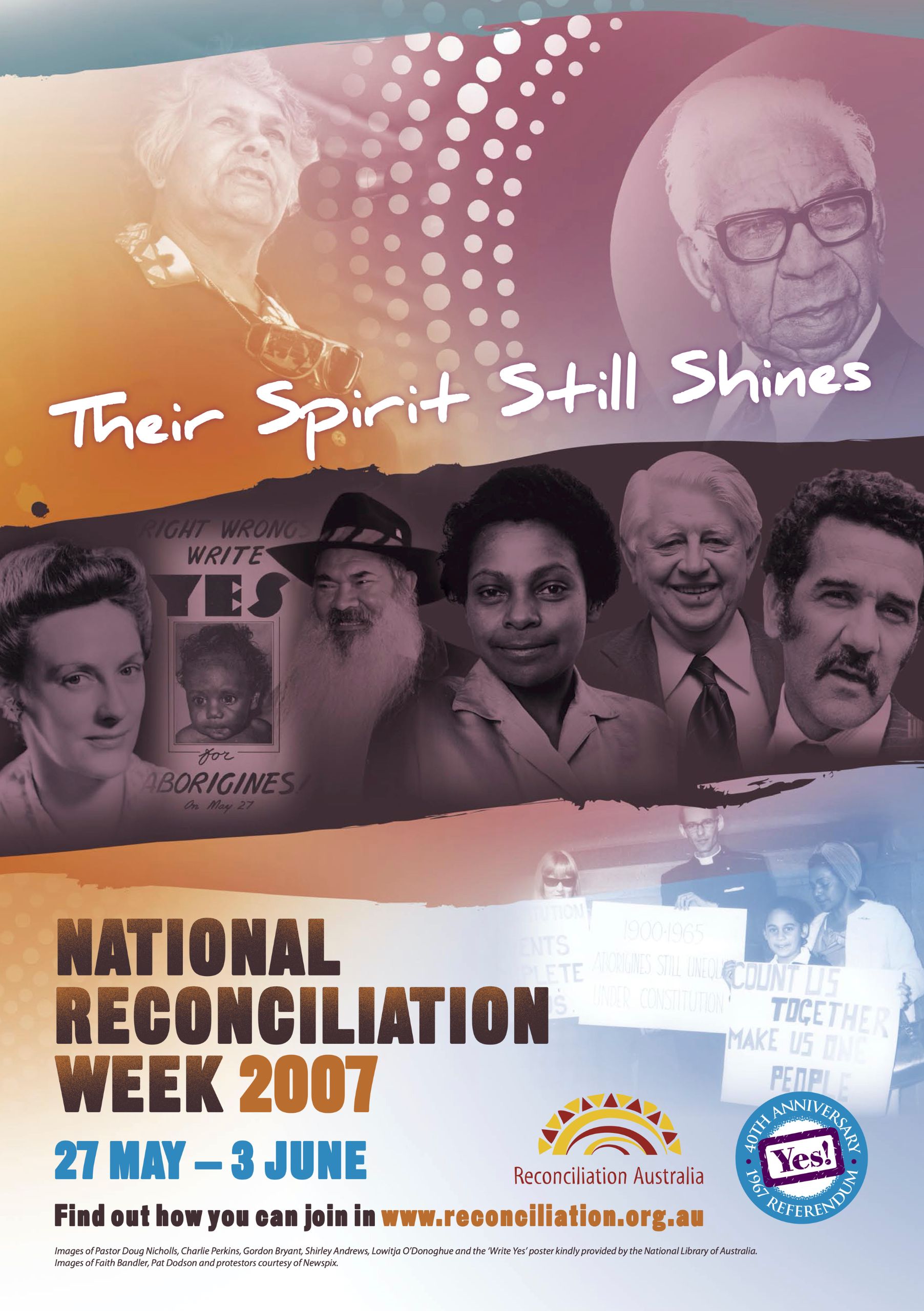
2007 marked 40 years since the 1967 referendum. The theme and poster highlighted people central to the success of that campaign and other reconciliation leaders who had followed in their footsteps, including Lowitja O’Donoghue, Sir Doug Nicholls, Pat Dodson and Faith Bandler.
Also in 2007, the John Howard-led Liberal-National Government launched the controversial Northern Territory Emergency Response (NTER) – commonly called the Intervention – and made a re-election pledge to hold a referendum on constitutional recognition. Despite pledging bipartisan support, Labor did not hold a referendum after they took power in 2008.
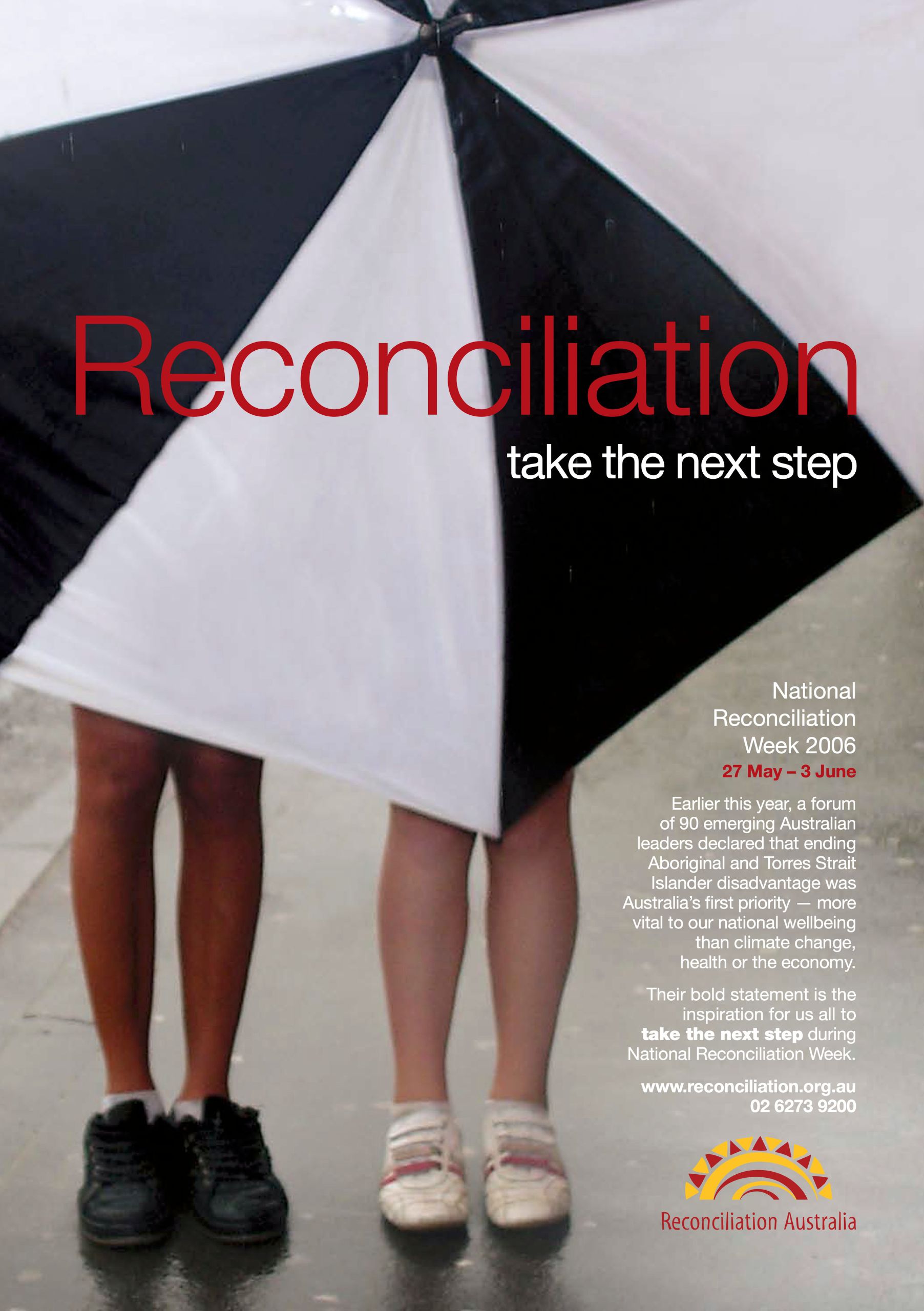
The RAP program was established to take a multi-faceted approach – across all sectors, ages, demographics and geographies – to close the life expectancy gap between Aboriginal and Torres Strait Islander people and non-Indigenous Australians.
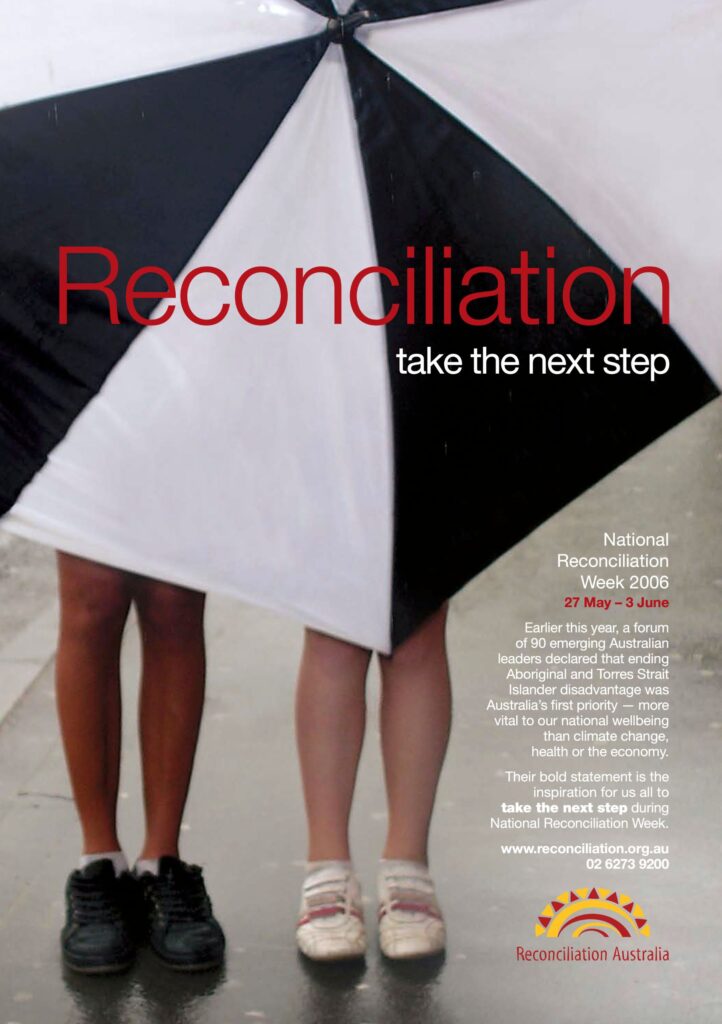
The 2006 theme heralded both of these developments as significant steps on Australia’s reconciliation journey, and urged us to carry this momentum forward.
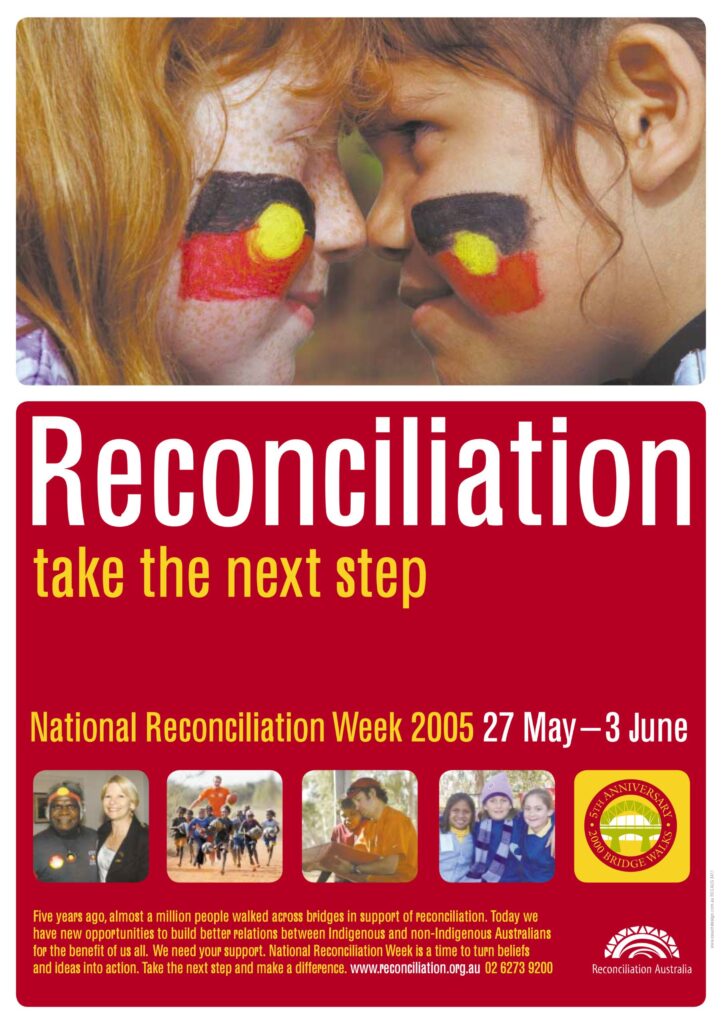
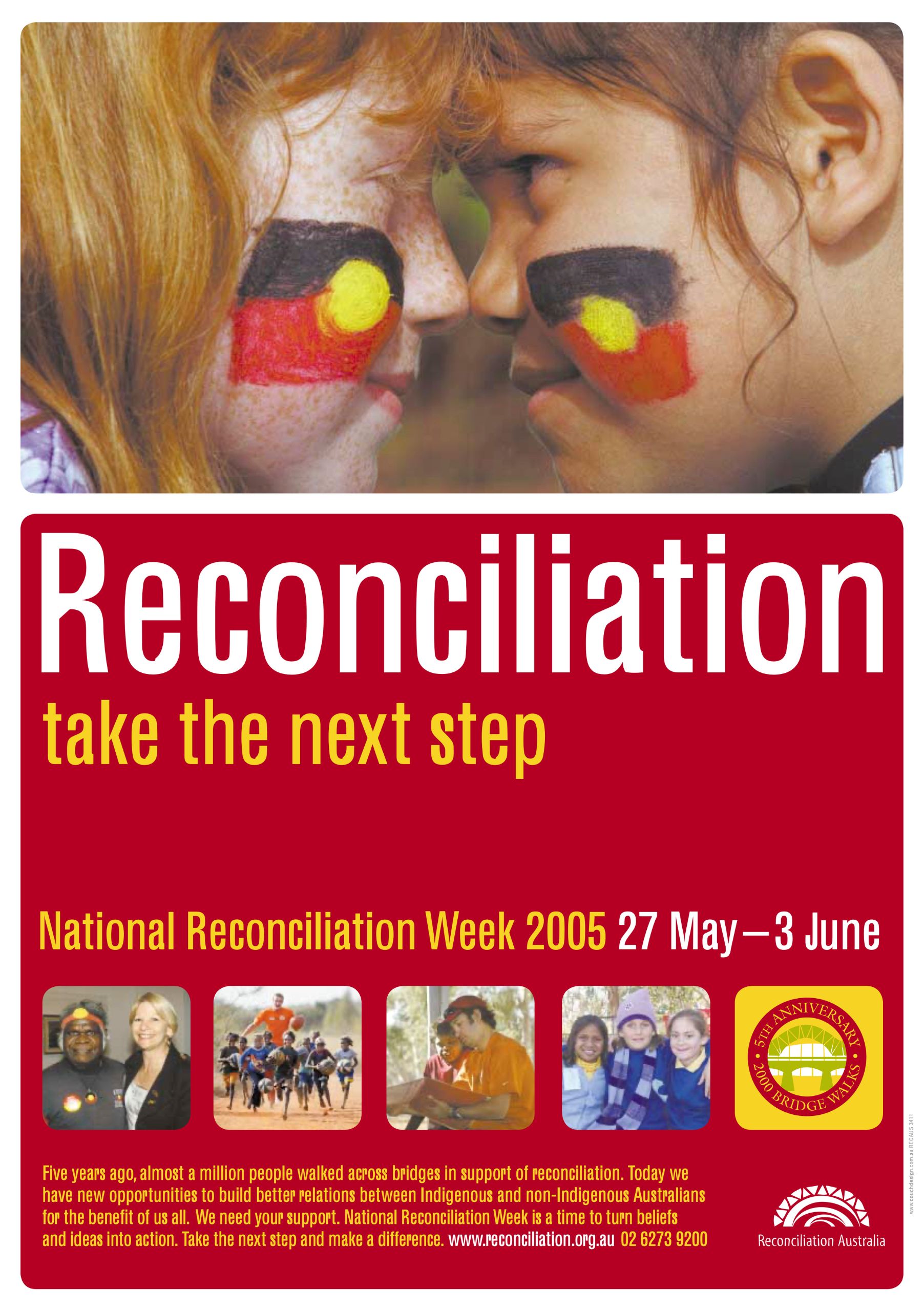
The 2005 theme called back to the Corroboree 2000 walks five years prior, when more than 250,000 people walked across the Sydney Harbour Bridge in what is still the single largest demonstration of public support for reconciliation.
It called on all Australians to look for new opportunities to build better relationships between Aboriginal and Torres Strait Islander and non-Indigenous peoples, for the benefit of all Australians.
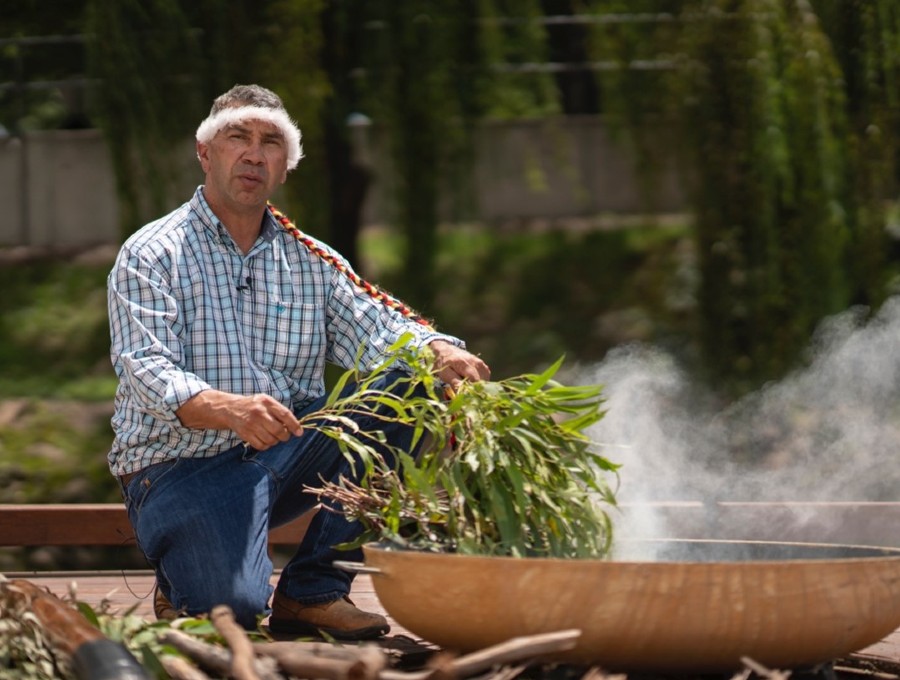
Paul Girrawah House has multiple First Nation ancestries from the South-East Canberra region, including the Ngambri-Ngurmal (Walgalu), Pajong (Gundungurra), Wallabollooa (Ngunnawal) and Erambie/Brungle (Wiradyuri) family groups.
Paul acknowledges his diverse First Nation history, he particularly identifies as a descendant of Onyong aka Jindoomang from Weereewaa (Lake George) and Henry ‘Black Harry’ Williams from Namadgi who were both multilingual, essentially Walgalu-Ngunnawal-Wiradjuri speaking warriors and Ngunnawal–Wallaballooa man William Lane aka ‘Billy the Bull’ - Murrjinille.
Paul was born at the old Canberra hospital in the centre of his ancestral country and strongly acknowledges his First Nation matriarch ancestors, in particular his mother Dr Aunty Matilda House-Williams and grandmother, Ms Pearl Simpson-Wedge.
Paul completed a Bachelor of Community Management from Macquarie University, and Graduate Certificate in Wiradjuri Language, Culture and Heritage and Management from CSU.
Paul provided the Welcome to Country for the 47th Opening of Federal Parliament in 2022. Paul is Board Director, Ngambri Local Aboriginal Land Council, Member Indigenous Reference Group, National Museum of Australia and Australian Government Voice Referendum Engagement Group.
Paul works on country with the ANU, First Nations Portfolio as a Senior Community Engagement Officer
Acknowledgement of Country
Reconciliation Australia acknowledges Traditional Owners of Country throughout Australia and recognises the continuing connection to lands, waters and communities. We pay our respect to Aboriginal and Torres Strait Islander cultures; and to Elders past and present.
Aboriginal and Torres Strait Islander peoples should be aware that this website contains images or names of people who have passed away.