Indigenous Procurement Policy

Indigenous Procurement Policy

Reconciliation Australia provided recommendations for the Indigenous Procurement Policy (IPP) Reform Discussion Paper, which also mentions and supports Supply Nation’s response to the paper.

The role of Indigenous procurement in the economic development of Aboriginal and Torres Strait Islander businesses is also outlined as a positive driver for success through the aims of the Reconciliation Australia’s Reconciliation Action Plan (RAP) program to embed public commitments and targets.

Our recommendations focused on the need for reform to provide clear definitions and measures that accurately reflect the needs and aspirations of First Nations peoples.

  1. Strengthening the IPP definition of Indigenous businesses to be minimum 51% Indigenous-owned, operationally managed and controlled by Indigenous peoples, and demonstrate Indigenous economic benefit.
  2. The above recommendation should be supported by a verification process including audit, reviews and physical interviews.
  3. Targeted measures to increase direct benefit of female-owned Indigenous business in delivering government Indigenous procurement.
  4. Commonwealth government should integrate learning from the private sector regarding building and developing scale (particularly Stretch and Elevate RAP Partners partnered with Indigenous businesses).
  5. Consistent, nuanced measurement and evaluation of IPP outcomes to identify gaps and opportunities for underrepresented sectors and new entrants.
Indigenous Procurement Policy

File Size: 2MB

Search
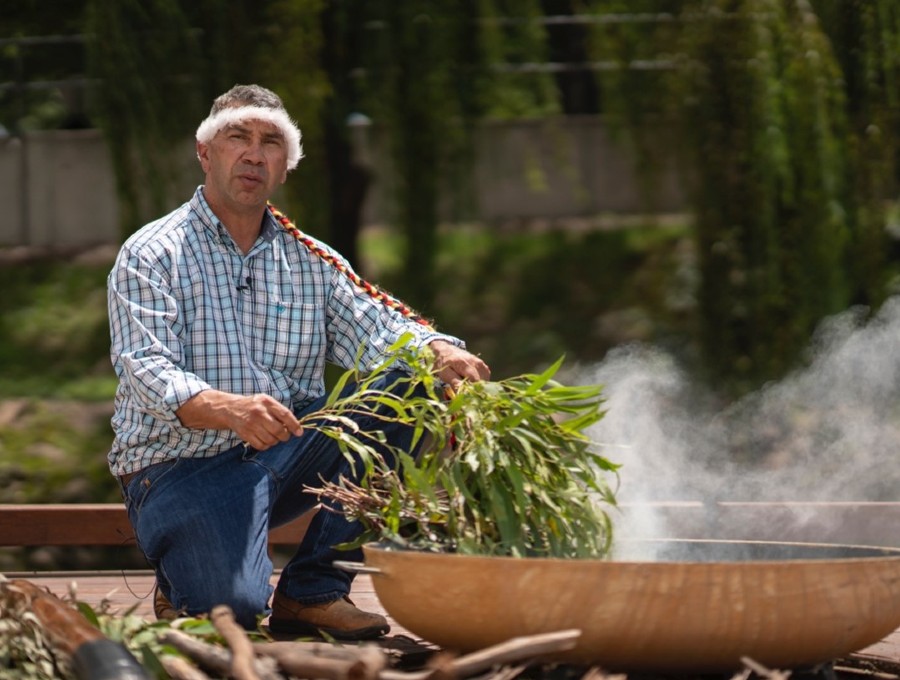
Paul House with gum leaves and smoke
Paul Girrawah House

Paul Girrawah House has multiple First Nation ancestries from the South-East Canberra region, including the Ngambri-Ngurmal (Walgalu), Pajong (Gundungurra), Wallabollooa (Ngunnawal) and Erambie/Brungle (Wiradyuri) family groups.

Paul acknowledges his diverse First Nation history, he particularly identifies as a descendant of Onyong aka Jindoomang from Weereewaa (Lake George) and Henry ‘Black Harry’ Williams from Namadgi who were both multilingual, essentially Walgalu-Ngunnawal-Wiradjuri speaking warriors and Ngunnawal–Wallaballooa man William Lane aka ‘Billy the Bull’ - Murrjinille.

Paul was born at the old Canberra hospital in the centre of his ancestral country and strongly acknowledges his First Nation matriarch ancestors, in particular his mother Dr Aunty Matilda House-Williams and grandmother, Ms Pearl Simpson-Wedge.

Paul completed a Bachelor of Community Management from Macquarie University, and Graduate Certificate in Wiradjuri Language, Culture and Heritage and Management from CSU.

Paul provided the Welcome to Country for the 47th Opening of Federal Parliament in 2022. Paul is Board Director, Ngambri Local Aboriginal Land Council, Member Indigenous Reference Group, National Museum of Australia and Australian Government Voice Referendum Engagement Group.  

Paul works on country with the ANU, First Nations Portfolio as a Senior Community Engagement Officer

Acknowledgement of Country

Reconciliation Australia acknowledges Traditional Owners of Country throughout Australia and recognises the continuing  connection to lands, waters and communities. We pay our respect to Aboriginal and Torres Strait Islander cultures; and to Elders past and present. 

Aboriginal and Torres Strait Islander peoples should be aware that this website contains images or names of people who have passed away.

Skip to content
Copy link
Powered by Social Snap