The conference message was clear and urgent – it is time to move beyond good intentions and shift toward genuine activation and systems change.
In early November, 830 delegates gathered across two jam-packed days for the 2026 National Reconciliation Action Plan (RAP) Conference, featuring 90 powerful speakers across 35 sessions.
The conference is one of the country’s most diverse and connects delegates from the RAP network across the health, community services, government, finance, education, corporate and cultural sectors as well as reconciliation leaders and advocates.
All are united with a purpose to have constructive conversations on embedding reconciliation into everyday practice.
The event marked two milestones – 25 years of Reconciliation Australia and 20 years of the Reconciliation Action Plan program. From eight original trailblazers, the network has grown to 3,300 organisations with a RAP, reaching over 5.9 million people. Today, one in five Australians works or studies in an organisation with a RAP.
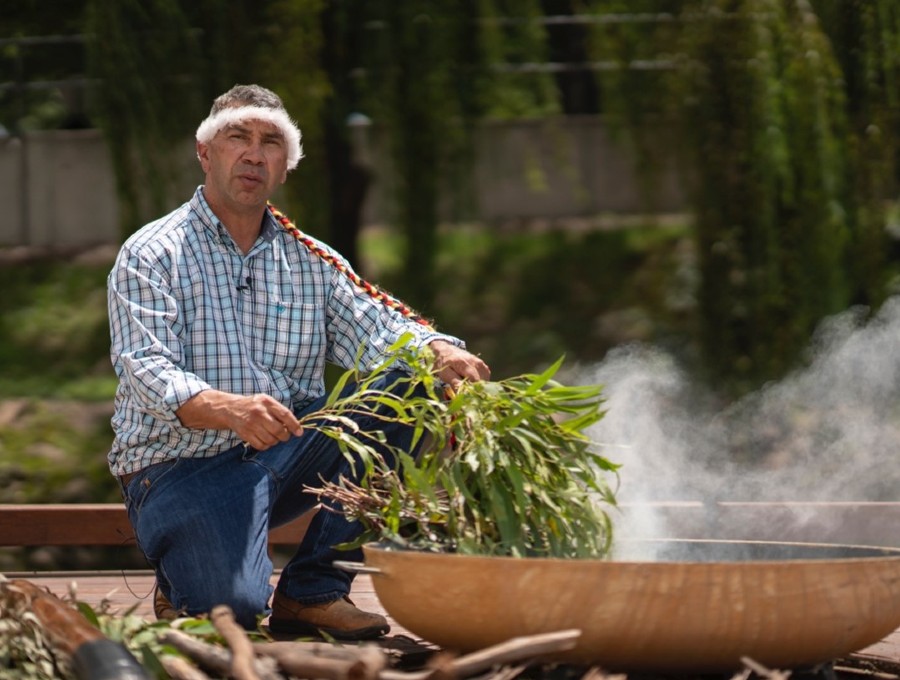
The program opened with the Aboriginal and Torres Strait Islander RAP Employee Gathering –held exclusively for First Nations attendees – marking the third time the network has met in person.
Hosted by NITV’s Marcellus Enalanga and led by Kaurna and Narungga Elders Uncle Frank Wangutya Wanganeen and Elaine Magias, the event provided a culturally safe space for 300 Aboriginal and Torres Strait Islander employees from across the RAP network to connect, support each other and share experiences.
Opening the main conference program, Reconciliation Australia CEO Karen Mundine issued both an invitation and a challenge.
‘All In asks us to examine our own role,’ she said. ‘Ask questions, listen closely and above all else, learn. Let’s turn our intentions into meaningful change.’
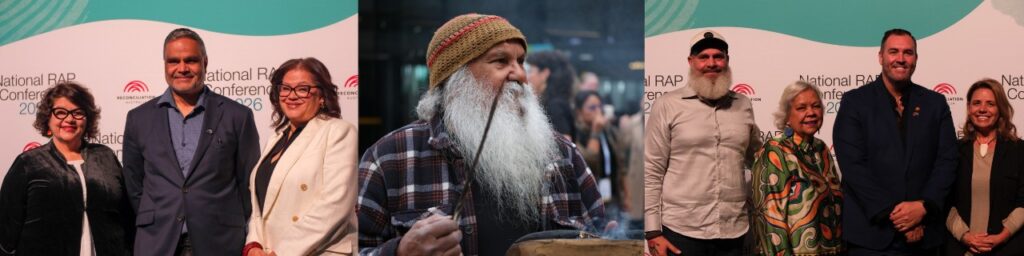
Confronting racism, foregrounding Truth-telling
Throughout the day, speakers emphasised that meaningful progress requires naming hard truths and dismantling systemic barriers.
In her keynote address, GO Foundation Director Tanya Hosch AM highlighted the necessity of confronting racism directly.
“The reality is, you can’t solve a problem you don’t talk about. Racism is hard to talk about. A lot of people don’t understand what it is and they can’t help eradicate racism if they don’t know what it is,” Hosch said.
During the Anti-racism plenary, Victorian Senator Jana Stewart, Chair of the Anti-racism Parliamentary Inquiry, spoke to the lived reality of First Nations peoples following the referendum. Noting that increased racism has forced many people to change how they move through the world, she urged allies to step forward.
‘If this is what you believe in, if these are your values, your brand, then you need to stand up and we need you with us, and sometimes as allies we need you to stand in front of us,’ said Senator Stewart.
Professor Nareen Young from UTS’sCentre for Indigenous People and Work challenged RAP organisations to back up their commitments with structural rigour. ‘Anyone who knows anything about employment practice knows that if a workplace doesn’t have an accountability framework, it doesn’t happen,’ said Young.
Truth-telling and treaty also remained front and centre of the conference.
University of Queensland Professor Jackie Huggins AM reminded delegates that the fight for treaty is far from over. ‘Let us never forget treaty. It’s not off the agenda yet. The fires are still burning,’ she said, adding that she felt humbled seeing partners across the country taking on the work.
Executive Director of the Centre for Truth-telling and Dialogue, Travis Lovett echoed that determination, pointing to treaty progress in Victoria as a source of hope for future generations.
Meanwhile, SBS First Nations Director Tanya Denning-Orman addressed the critical role of media in shaping national policy and accountability. ‘Bad public perception leads to bad public policy,’ she noted, highlighting how NITV continues to rise to the challenge as Australians seek out authentic First Nations storytelling.
South Australian Commissioner for Aboriginal Children and Young People Dale Agius summed up the day’s core message, reminding leaders where true impact happens, ‘The challenge for reconciliation is to carry our commitments into the places where decisions are made. That is where being All In really counts and really .’
Shifting to long-term, rights-based partnerships
Day two of the RAP Conference challenged organisations to move beyond transactional projects toward long-term, rights-based partnerships grounded in trust and collective action.
Opening Friday’s keynotes, Productivity Commissioner Selwyn Button urged delegates to use data honestly and co-design solutions with communities. ‘Sometimes the data tells you a story you don’t want to hear but it’s about how you work with your Aboriginal and Torres Strait Islander partners to improve for the future,’ Button said, calling on leaders to give organisations certainty to deliver longer-term outcomes.
In the Respecting First Nations rights plenary, speakers focused on shifting corporate mindsets. Managing Director of Regional Economic Solutions Ivan Ingram reinforced this, urging organisations to shift from treating First Nations peoples as stakeholders to recognising them as rightsholders. ‘The principles in the UN Declaration on the Rights of Indigenous Peoples are the highest articulation of this,’ he said.
Francis Nona from Queensland University of Technology called for dismantling top-down hierarchies: ‘We have to readjust from an ego-centric to eco-centric mindset, empowering the knowledge systems inherited over 60,000 years.’
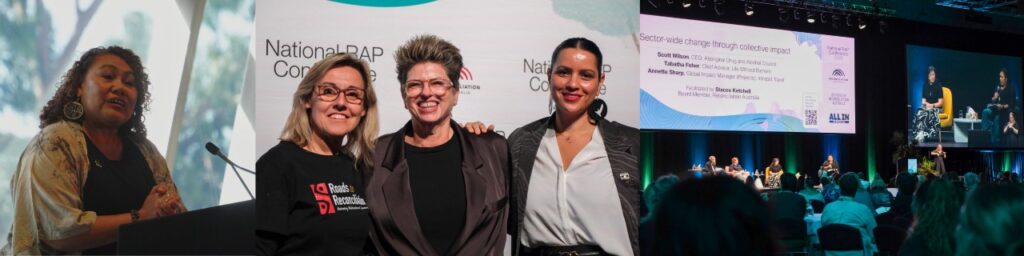
Finally, the Sector-wide change through collective impact plenary explored industry collaboration. Tabatha Feher from Life Without Barriers described how opening the door sparked momentum: ‘We provided the table but ultimately people ran to that work. That felt like collective action.’
The Conference also hosted 20 practice-led breakout sessions on diverse topics covering employment, partnerships, leadership, impact, cultural safety, learning and governance.
Looking ahead to the next decade
Across every plenary and workshop, a clear consensus emerged: reconciliation is not just about what organisations and people do, but why and how they do it. Moving beyond simply wanting to make a difference requires embedding First Nations leadership and accountability into the systems that shape everyday decisions.
Closing the conference, Karen Mundine issued a rallying call to the RAP network members for the decade ahead.
‘For the next 10 years it’s about how we deepen the commitment, how we build out the coalitions, how do RAP partners work together to keep expanding. We need you to stand up, we need you with us. We are a mighty network!’ Mundine said.
Ultimately, the true success of the 2026 RAP Conference will be judged on what happens next, when organisations take these lessons back to their workplaces and commit to being All In today, every day.