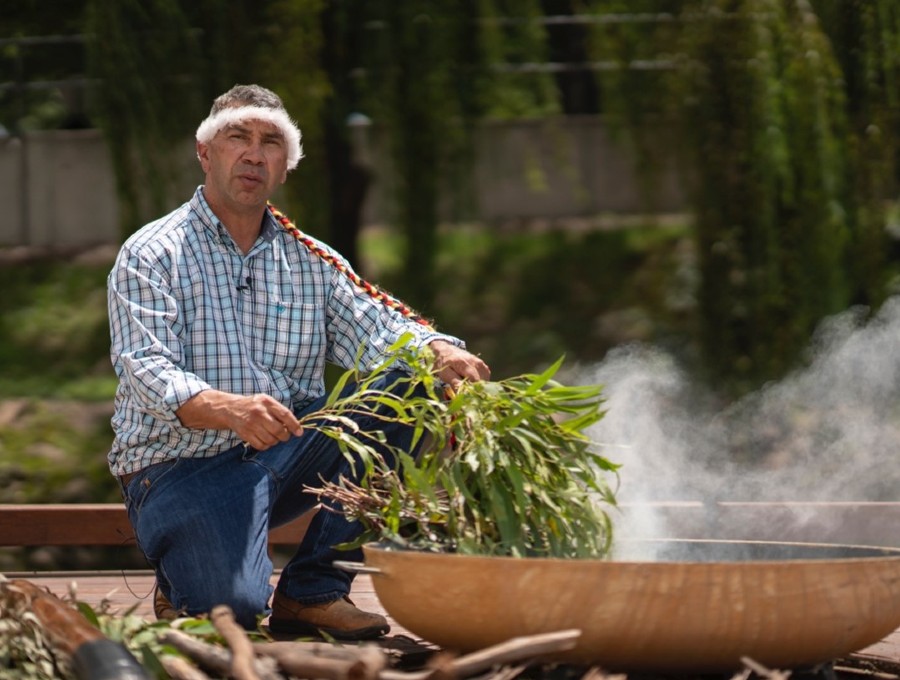
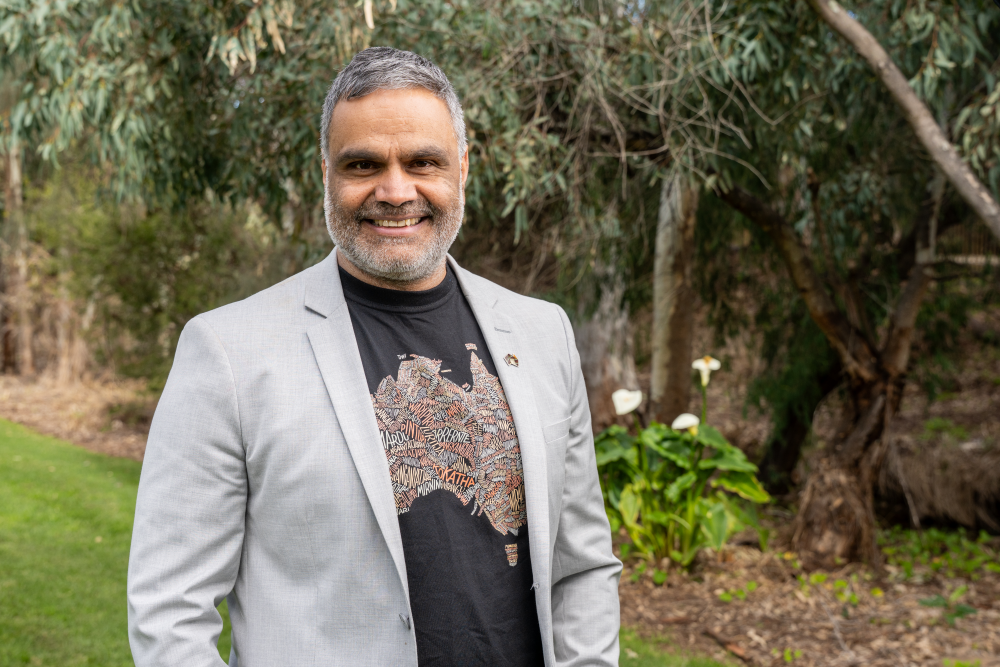
South Australia’s Commissioner for Aboriginal Children and Young People and proud Kaurna, Narungga, Ngadjuri and Ngarrindjeri man Dale Agius has spent much of his career working at the intersection of First Nations affairs, government and community.
Ahead of his keynote address at the National RAP Conference 2026 in Tarntanya/Adelaide, Reconciliation News spoke with Dale about self-determination, South Australia’s First Nations Voice, the power of allyship and why the next generation gives him hope.
What led you into First Nations affairs and this work?
My journey has been a long journey in government. I started with a traineeship in the Department for Correctional Services and ended up working there for more than 10 years.
That gave me an understanding of the intersection between criminal justice, government and the support our mob received.
Some of those things were inconsistent, and I wanted to understand how other agencies worked, what the connectors were and where the barriers were.
That gave me an understanding of the intersection between criminal justice, government and the support our mob received. Some of those things were inconsistent, and I wanted to understand how other agencies worked, what the connectors were and where the barriers were.
I moved into the Aboriginal Affairs and Reconciliation division before managing Metropolitan Aboriginal Youth and Family Services. I later worked in senior roles across government and became South Australia’s inaugural Commissioner for First Nations Voice.
What led me into Aboriginal policy and politics was understanding the level of disadvantage Aboriginal communities experience, and seeing well-intended programs designed at the top not necessarily reaching people on the ground. I thought there was probably a role for me to play in those spaces.
Why is independence important in your current role as Commissioner for Aboriginal Children and Young People in South Australia?
It gives me the ability to critically analyse government policy and how it plays out in practice.
It means holding a moral compass around how Aboriginal culture is represented, truth-telling about our history, current disadvantage and systemic failure, and looking at how we create sustained models of self-determination for this generation and the next.
It is a privilege to hold an independent office backed by strong legislation. I can engage with government and the service sector and provide an Aboriginal perspective and a balanced view of how things are actually going for our communities.
Those perspectives shouldn’t be politicised. Independent commissioners’ recommendations should be understood through the lens of equality and self-determination.
As inaugural Commissioner for the SA First Nations Voice, you led statewide consultations that helped shape the body. What does it represent for you?
Our community had been asking for this reform for a long time.
The Voice provides representative members with direct channels to Parliament, the Premier, Cabinet and government. That is an awesome achievement for South Australia.
One of my proudest moments was the signing on the steps of Parliament. Aboriginal leaders stood with the Premier, and I could move aside as Commissioner and give recognition to our Elders who had fought for this for decades.
It showed that Aboriginal leadership and culture can work side by side with government and Parliament when it is done with respect and a common interest.
That united approach is a blueprint for how our leadership can work on equal footing with government.
What role do allies play in voice, truth-telling and treaty progress?
The Voice isn’t a silver bullet. It is a mechanism to be heard. It gives community members who want to speak up a place to speak.
Our informed and committed allies have an important role because at every table we are outnumbered. When they see us being challenged or discredited, when they see language weaponised against us, or our self-determination and the integrity of our history challenged, they can stand beside us.
We shouldn’t underestimate the strength of our allies.
More than 6.2 million Australians stood with us in the referendum. Many still show up when our culture is under attack and when they see direct or indirect racism directed at our young people, communities or Aboriginal employees.
The next part of reconciliation is helping allies understand why voice is important, why truth-telling is important and why treaty is important.
How do we ensure the next generation is All In for reconciliation?
I have the privilege of speaking with Aboriginal young people every week, in schools, TAFEs, community spaces and through programs run by my office.
At our youth summits and public speaking and art competitions, they express what matters to them, their families, their communities and their country.
Our leaders keep saying the same thing: we need more leaders. We need leaders across every sector, every role and every conversation, leading and guiding this country towards greater reconciliation.
Giving young people safe spaces to speak openly and honestly and knowing their voices will reach the highest levels of government, creates an opportunity for strong reform, accountability and transparency.
Most importantly, it creates a pathway for our next generation to lead.
To learn more about the SA Commissioner for Aboriginal Children and Young People’s work, head to cacyp.com.au
This article is from the 56th edition of Reconciliation News. Read the rest of the issue.