This resource hub is continually growing with useful information about truth-telling, how to get involved, and how to access practical support for community-led activities.
These resources promote practices that respect Aboriginal and Torres Strait Islander people and culture and are informed by research and ongoing learning from community.
Sign up to be notified about new resources.
Cultural warning: this page contains material that may be distressing, particularly to Aboriginal and Torres Strait Islander peoples, including historical images and references to and images of deceased persons. Please take care when accessing this material. To find support, please visit our First Nations social and emotional support service directory.
Introducing truth-telling
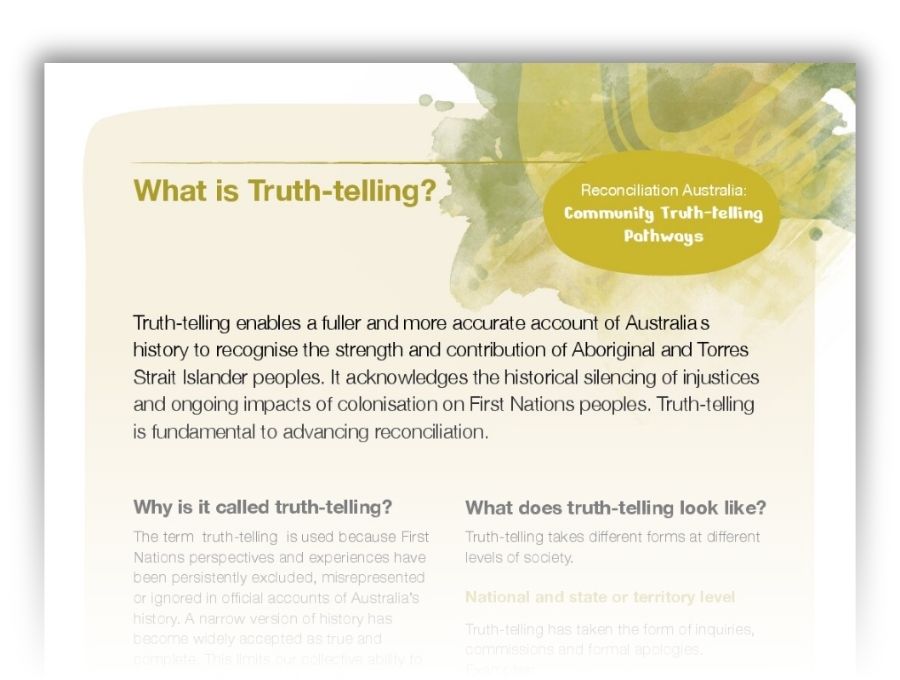
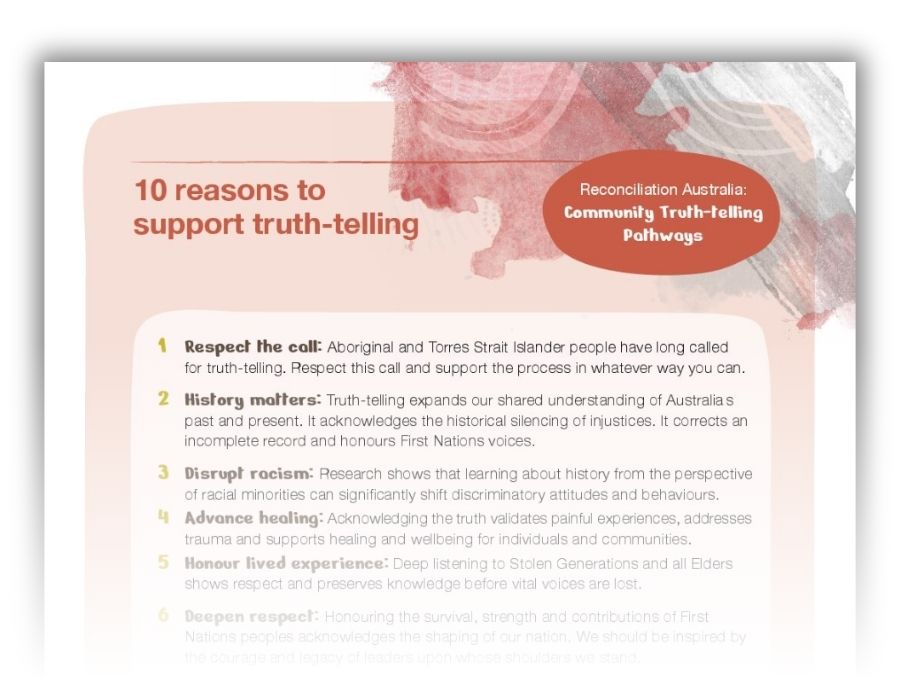
These resources can help you to understand what truth-telling is, why it’s important and ways to advance your own learning and truth-telling journey.
Other helpful introductory resources
Start your own truth-telling journey by building your baseline knowledge of our national history.
65,000+ years on this land
- Deep Time, an epic history of Aboriginal and Torres Strait Islander peoples by the ABC
- The First Inventors documentary series delving into 65,000+ years of Aboriginal Australian invention on SBS On Demand
- Dark Emu by Bruce Pascoe, a non-fiction book rebutting the colonial myths that have worked to justify dispossession
The Frontier Wars: Resistance and resilience
- The Australian Wars documentary series exploring the battles fought during the early years of colonisation on SBS On Demand
- Podcasts on the Australian Frontier Conflicts website
- Unsettled video exhibition at The Australian Museum
- Frontier Wars animation by Common Ground
- Interactive map of colonial frontier massacres
- The ghosts are not silent, ABC News investigation into largely unacknowledged acts of settler violence in Western Australia
- Truganini: Journey through the apocalypse by Cassandra Pybus, the biography of an extraordinary Aboriginal woman
The Stolen Generations: Courage and survival
- Kinchela Boys Home history
- The Grey Line documentary about a woman coming to terms with the consequences of the government policies that removed Aboriginal children from their families
- Bringing Them Home report on the Australian Human Rights Commission website
- Read the summary report
- Intergenerational trauma factsheet by the Healing Foundation
- Survivor stories by the Healing Foundation
Understanding the policy picture
- The School Exclusion Project Research Report by the National Indigenous Youth Education Coalition
- Curation of laws and policies that have impacted the lives of First Nations people since 1788, the Towards Truth project
Heroes and heroines
- 8 war heroes you didn’t learn about in school from SBS NITV
- Diving into defining moments of Australian Indigenous civil rights with the Freedom Rides from SBS NITV
- The story of Yarri and Jacky Jacky, Gunadagai’s unsung heroes, on the NSW Aboriginal Land Council website
- Fanny Balbuk: Perth Resistance Fighter by the National Trust of Western Australia
- Wave Hill Walk-Off information and resources from the National Museum of Australia
- Mabo, a feature film about the remarkable life of Eddie ‘Koiki’ Mabo, on ABC iView
Truth-telling collection
- The Descendants investigative series by The Guardian meets Australians facing the truth of their family’s involvement in frontier violence
- Truth-telling documentaries on SBS On Demand
Truth-telling in action
Communities are working together on place based truth-telling in a range of creative ways. Read through the case studies to learn some of the many forms community truth-telling can take, and see below for resources and inspiration when planning your own event.
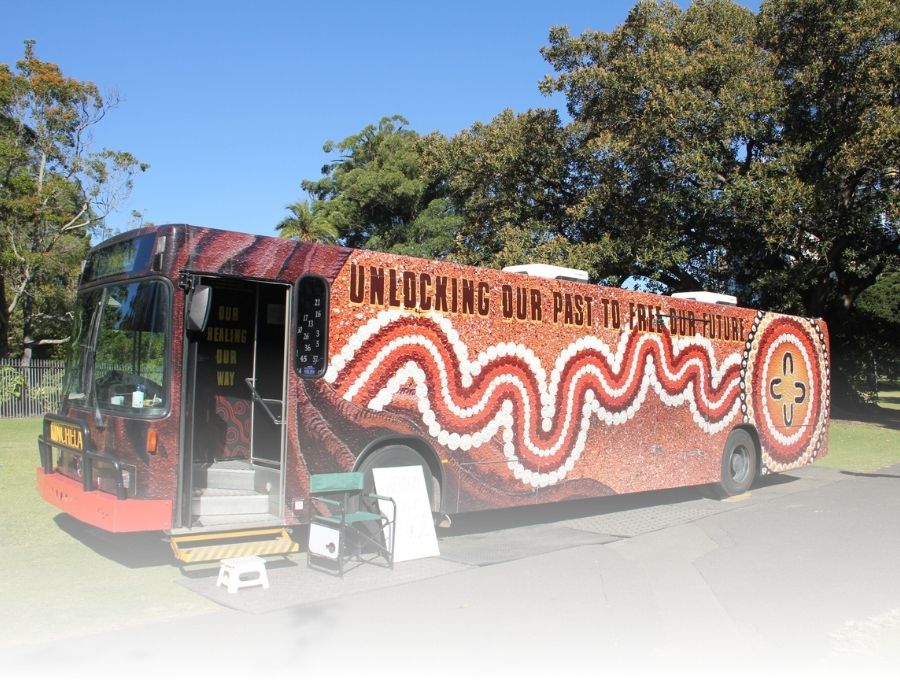
Manna Gum Avenue Memorial honours the Dja Dja Wurrung people who died in the Frontier Wars.
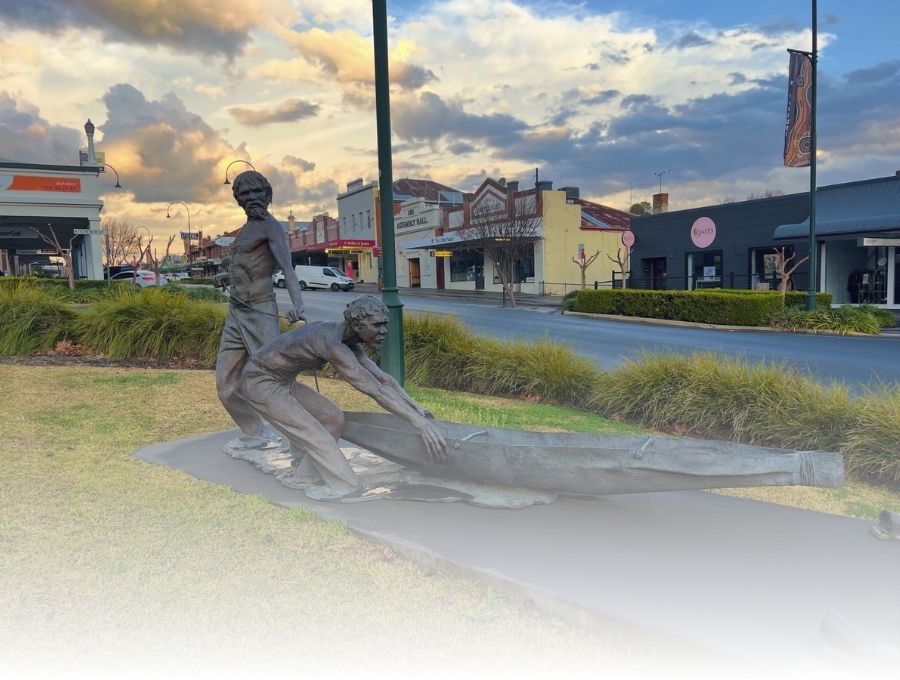
The community of Gundagai has acted to ensure Wiradjuri heroes Yarri and Jacky Jacky are remembered.
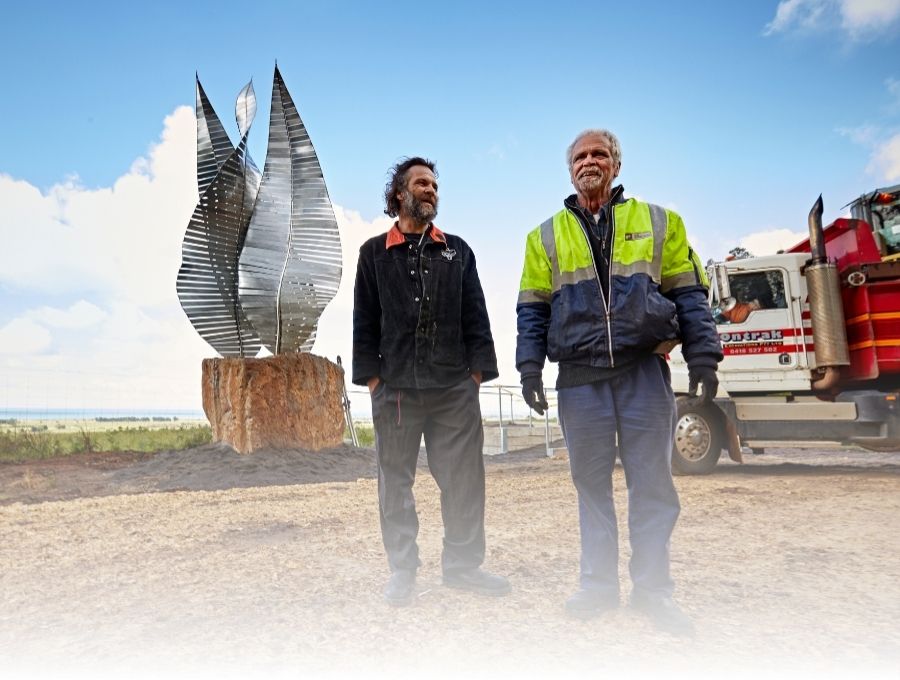
The Mayapa Weeyn sculpture in Portland, Victoria has sparked conversation about who and what we commemorate.
Build your evidence base
These sites and archive services can help you gather supporting evidence for your truth-telling initiative.
Archive services:
- National: First Nations at National Archives of Australia
- NSW: First Nations Community Access to Archives at Museums of History New South Wales
- Vic: Koorie services at Public Record Office of Victoria
- SA: Finding your Aboriginal History at State Record of South Australia
- Qld: Aboriginal and Torres Strait Islander peoples at Queensland State Archives
- Indigenous Service information hub on the Australian War Memorial website
- Australian Institute of Aboriginal and Torres Strait Islander Studies family history resources
Other resources:
- Towards Truth maps laws and policies that have impacted the lives of First Nations people since 1788
- National Indigenous Youth Education Coalition School Exclusion Project
Types of truth-telling
Here are some of the many forms community truth-telling can take:
Events and
installations
- Apologies
- Exhibitions
- Festival
- Memorials
- Murals and statues
- Plaques and public signage
- Re-enactments
Resources and information
- Digital maps
- Documentaries
- Local government webpages
- Public talks
- Recorded oral histories
- Walking and cultural tours
Reclamation and restoration
- Cultural heritage repatriation
- Land back
- Renaming/dual naming
- Statue removal or reinterpretation
Respecting people, rights and stories
These resources support planning for truth-telling that is trauma informed and promotes safety and well-being.
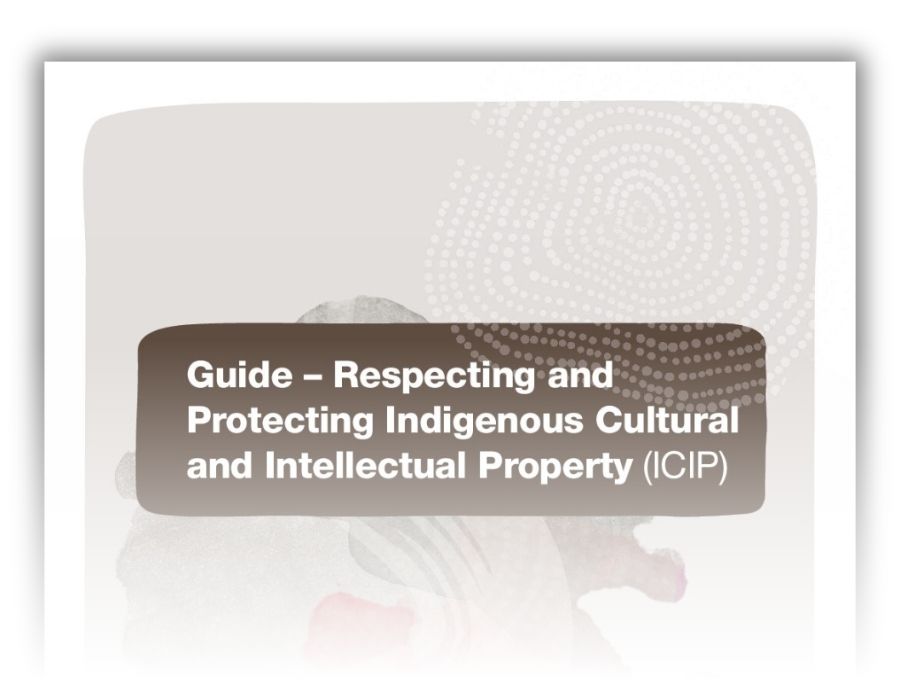
Access practical resources on ICIP rights and protections, developed with Terri Janke and Company.
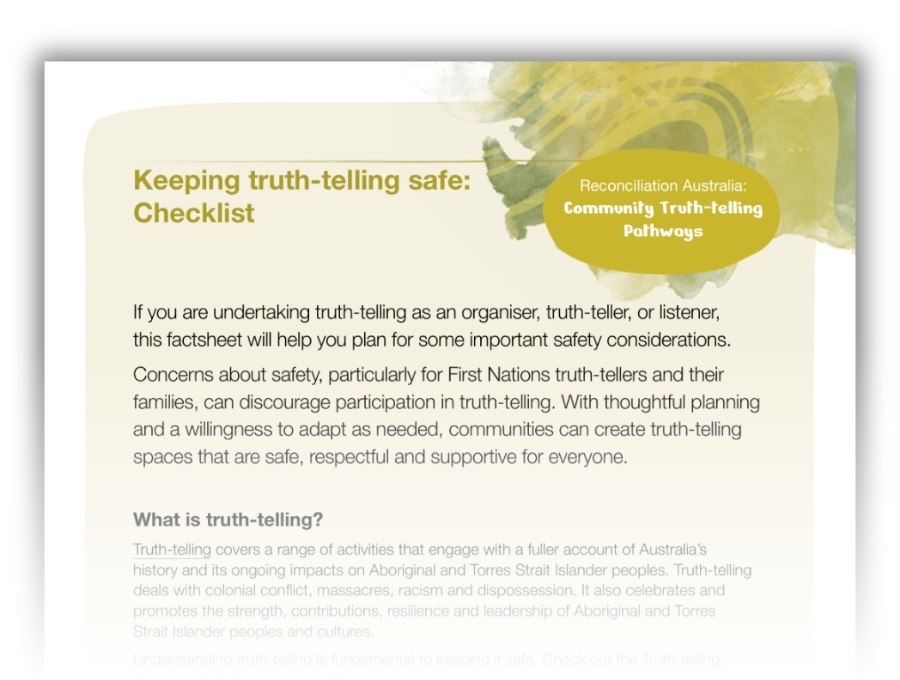
If you are undertaking truth-telling as an organiser, truth-teller, or listener, this factsheet will help you plan for some important safety considerations.
More information on keeping truth-telling safe
Use these resources to further inform safe practice in truth-telling activities.
- Good Yarn Guidelines for media reporting on First Nations issues
- Guide to Respectful and Inclusive Language and Terminology from Reconciliation Australia’s Narragunnawali: Reconciliation in Education program
- Coping with the impacts of trauma brochure by the Healing Foundation
- ICIP in the arts from Creative Australia
- ICIP for researchers from the University of Newcastle
- Indigenous Arts Code: Artists’ Perspectives on ICIP
Truth-telling together
Truth-telling should always be First Nations led, but everyone has a role. These resources offer guidance for different parts of the community on getting involved.
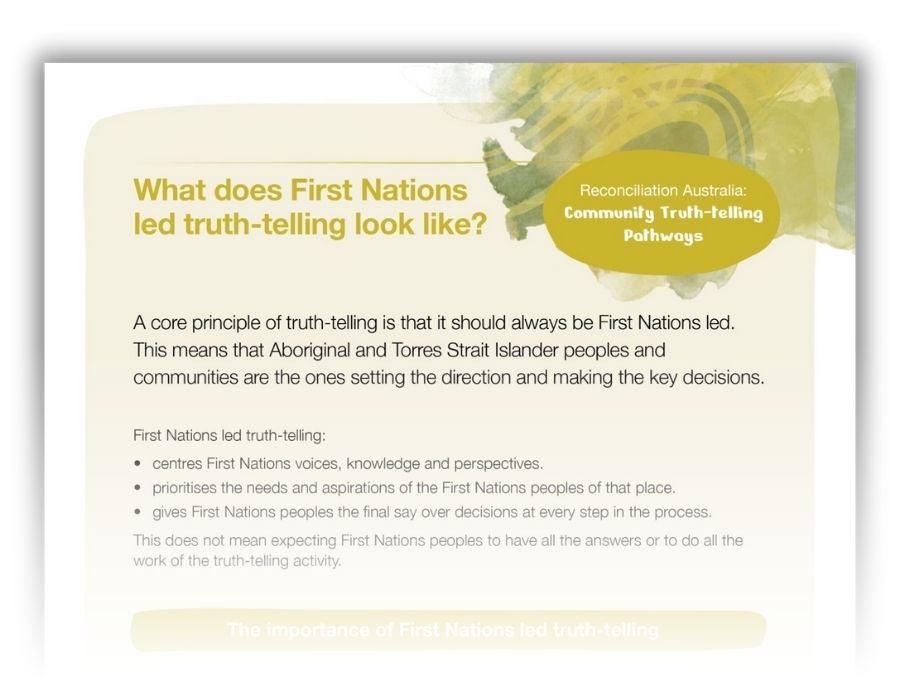
Understand one of the core principles of community truth-telling.
Learn more about getting involved
Learn more about participating in truth-telling.
- A practice of truth-listening on the ANTaR website
- Truth-telling and Treaty through public libraries at Public Libraries Connect
- SPEAKINGTRUTH – Truth-telling for multicultural communities
Truth-telling research
This collection of community truth-telling research highlights the principles of best practice truth-telling, the barriers and enablers to participation, and the examples of community truth-telling across diverse settings.
Findings on the planning and delivery of effective truth-telling.
How community truth-telling contributes to reconciliation.
Further research
- Truth, Justice, Healing Project: Hear My Heart discussion paper by the Ebony Institute
- Reconciliation Australia’s 2019 report on local government truth-telling workshops
- 2024 Australian Reconciliation Barometer data on truth-telling and historical acceptance