Films and videos are accessible and engaging ways to explore the truth about our shared history, cultures, and experiences. In Australia, a rich filmmaking history − shaped by both acclaimed and emerging filmmakers − brings these stories to life.
To mark 25 years of Reconciliation Australia, we’ve curated a list of 25 must-watch feature films, many from First Nations directors.
Which ones have you seen? What will you watch next? Use our recommendations below and find a film or five to watch this National Reconciliation Week and beyond.
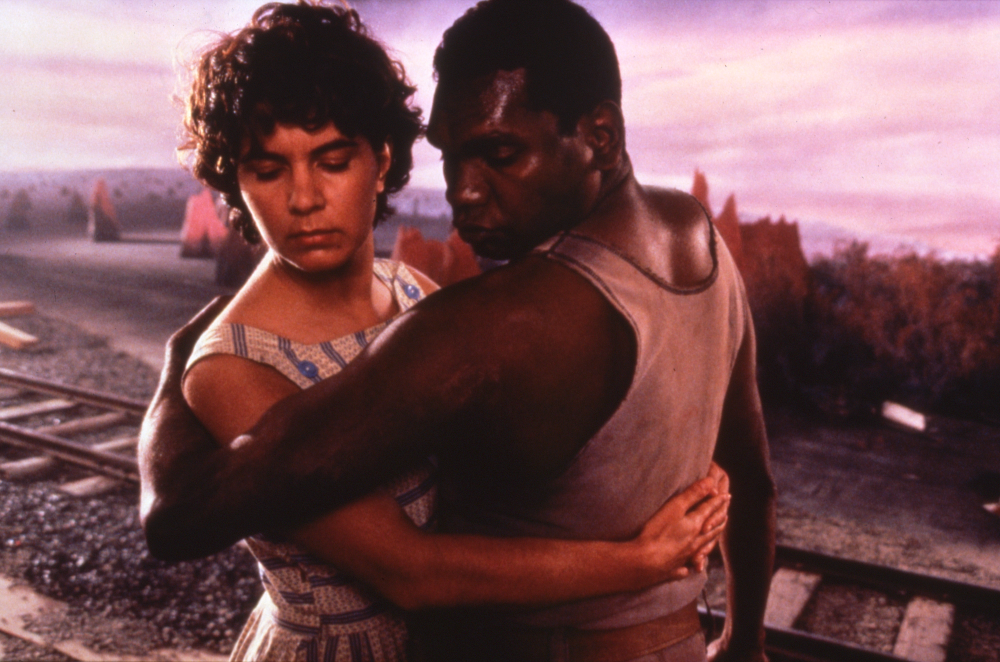
Jedda (1955) dir. Charles Chauvel
The first feature film with Aboriginal actors in starring roles, offers rare on-screen representation for the time, while also being starkly illustrative of colonial attitudes of its era.
Walkabout (1971) dir. Nicolas Roeg
Based on a novel by James Vance Marshall, two white children from the city become lost in the outback and encounter a lone Aboriginal boy (David Gulpilil, in his first role) who helps them navigate the landscape.
The Chant of Jimmie Blacksmith (1978) dir. Fred Schepisi
Based on a novel by Thomas Kenneally inspired by the life of Jimmy Governor, an Aboriginal man becomes a fugitive in an early cinematic examination of racism and First Nations dispossession.
Manganinnie (1980) dir. John Honey
Based on a novel by Beth Roberts, a Tasmanian Aboriginal woman (played in the film by Elcho Island woman Mawuyul Yanthalawuy) travels with a young white girl after her people are massacred by colonists.
beDevil (1993) dir. Tracey Moffatt
A trilogy of ghost stories inspired by Moffatt’s Aboriginal and Irish heritages. Moffatt features alongside Jack Charles and Lex Marinos.
Radiance (1998) dir. Rachel Perkins
Three sisters living separate lives reunite to attend their mother’s funeral. Stars Deborah Mailman, Trisha Morton-Thomas and Rachael Maza.
Yolngu Boy (2001) dir. Stephen Maxwell Johnson
Three teenage boys in the NT community of Yirrkala navigate Yolŋu and Western ways of life.
The Tracker (2002) dir. Rolf de Heer
David Gulpilil plays a tracker leading police in pursuit of an Aboriginal fugitive in this exploration of colonial racism.
Beneath Clouds (2002) dir. Ivan Sen
This strikingly shot road movie follows two teenagers, both on the run and both searching to reconnect with family.
Rabbit-Proof Fence (2002) dir. Phillip Noyce
Based on a true story, three girls escape the Moore River Native Settlement to follow the 1600km-long rabbit-proof fence and find their way home to Jigalong WA.
Ten Canoes (2006) dir. Rolf de Heer
All spoken in Yolŋu Matha language, with English narration by David Gulpilil, Ten Canoes is a representation of life in Arnhem Land before colonisation through a goose egg hunting story.
Samson and Delilah (2009) dir. Warwick Thornton
This multiple award-winning film follows Samson and Delilah as they need to leave their Central Australian community for Alice Springs and all of its challenges.
Bran Nue Dae (2009) dir. Rachel Perkins
Based on Jimmy Chi’s classic musical, a teenager flees boarding school in Perth and has a series of musical adventures on his way back home to Broome. Featuring Jessica Mauboy, Ernie Dingo, Geoffrey Rush and Missy Higgins.
Toomelah (2011) dir. Ivan Sen
A ten-year-old boy falls in with a gang in his home community of Toomelah NSW. The film is raw and realistic and inspired by Sen’s observations of the town his mother grew up in.
Mabo (2012) dir. Rachel Perkins
A dramatic depiction of the life story of revered land rights campaigner Eddie ‘Koiki’ Mabo. Stars Jimi Bani and Deborah Mailman.
The Sapphires (2012) dir. Wayne Blair
Three sisters (Jessica Mauboy, Deborah Mailman and Miranda Tapsell) and their cousin (Shari Sebbens) are the trailblazing soul group, The Sapphires. They deal with racism and war zones as they travel to Vietnam to perform for troops in the 1960s.
Satellite Boy (2012) dir. Catriona McKenzie
A young boy learns to heed his grandfather’s traditional wisdom in chasing his dream to open a restaurant in his remote Kimberley town.
Charlie’s Country (2013) dir. Rolf de Heer
Feeling out of place in modern Australia, Yolŋu man Charlie (David Gulpilil) goes to live on Country but cannot completely escape the world outside.
Mystery Road (2013) dir. Ivan Sen
Detective Jay Swan (Aaron Pedersen) returns to his outback hometown to investigate the death of a teenage Aboriginal girl. This film’s success led to a sequel, Goldstone, and an acclaimed TV series spin-off.
Sweet Country (2017) dir. Warwick Thornton
A stockman and station hand in Central Australia fights back against his abusive employer and is forced to go on the run.
Top End Wedding (2019) dir. Wayne Blair
After a bride-to-be’s (Miranda Tapsell) mother disappears to her home on the Tiwi Islands, she and her British husband travel to the Top End to track her down.
The Drover’s Wife (2021) dir. Leah Purcell
Henry Lawson’s famous short story is reimagined with an Aboriginal mother (Leah Purcell) in the central role, fighting to protect her family.
Sweet As (2022) dir. Jub Clerc
A troubled teenager attends a photography camp in the Pilbara, learning about life, loyalty and love along the way.
Limbo (2023) dir. Ivan Sen
A non-Indigenous detective battles personal demons while investigating the long cold case of a murdered young Aboriginal woman.
The Moogai (2024) dir. Jon Bell
Young parents (Shari Sebbens and Meyne Wyatt) start to believe their child is possessed by a malevolent spirit.
Documentaries
If documentaries are more your thing, make sure to check out the Reconciliation Film Club.
Hosting a screening of a Reconciliation Film Club documentary is an opportunity to bring people together to develop a deeper understanding of First Nations perspectives and histories, ignite conversation and spark change.
Reconciliation Australia, NITV and SBS are proud partners of Reconciliation Film Club. To request a screening or learn more, head to sbs.com.au/nitv/collection/reconciliation-film-club
This article is from the 55th edition of Reconciliation News. Read the rest of the issue.